vouacapoua spp., Fabaceae, Angiospermae (Hardwood)

Other names: Acapu, Ritangueira, Partridgewood, Sara, Sarabebeballi, Tatbu, Bois perdrix, Bounaati, Épi de blé, Wakapoe
Chatoyance was measured by the chatometry.com team using the PZC method. The statistics for this specific timber are hereby summarized to provide an evaluation of data robustness:
Number of sources for samples: 4
Number of individual trees analyzed: 4
Number of specimens: 7
Number of measurements: 27
Max PZC read (of all measurements): 14.0
Min PZC read (of all measurements): 9.5
Max PZC average on one log: 12.8
Min PZC average on one log: 10.4
PZC Average of all logs: 11.8
Species: vouacapoua spp.
Family: Fabaceae
Clade: Angiospermae
Description: Large tropical trees in the legume family (Fabaceae), native to the Amazon, characterized by pinnate leaves, paniculate flowers, and woody pods, often valued for their dense timber.
Other Local Names: Acapu, Ritangueira, Partridgewood, Sara, Sarabebeballi, Tatbu, Bois perdrix, Bounaati, Épi de blé, Tatbu, Bruinhart, Wakapoe
Reference Colour: Dark brown
Texture: Medium
Grain: Straight
Interlocked Grain: Absent
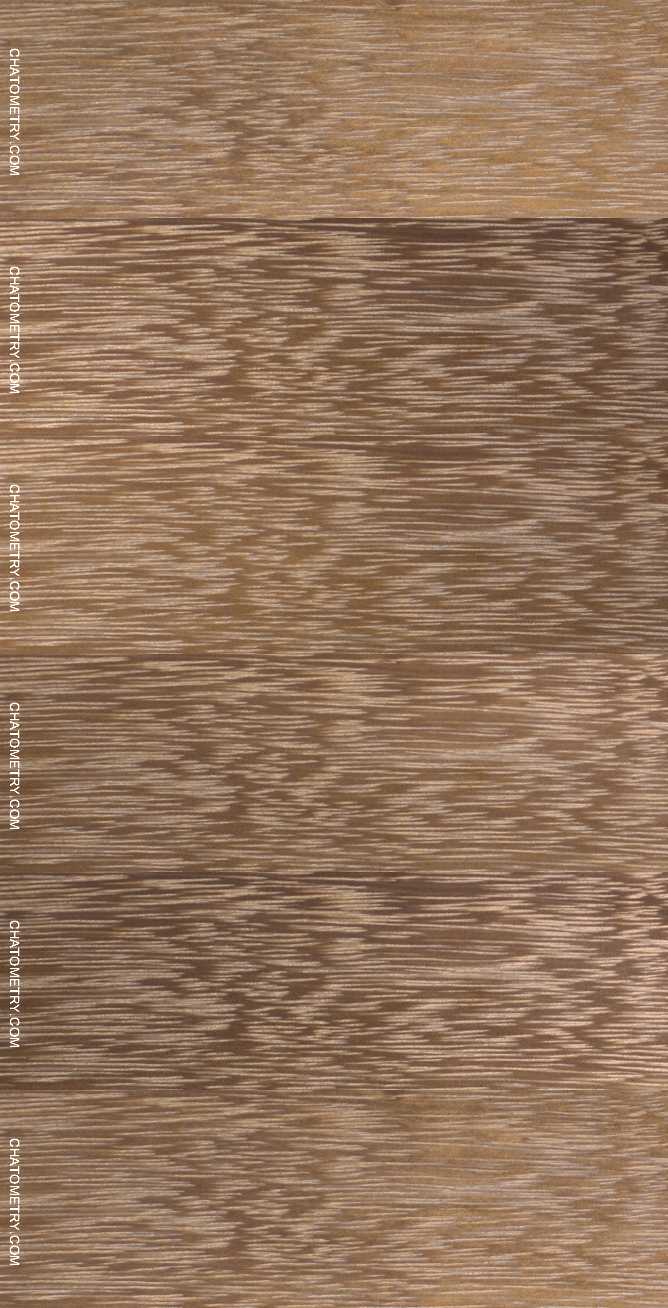
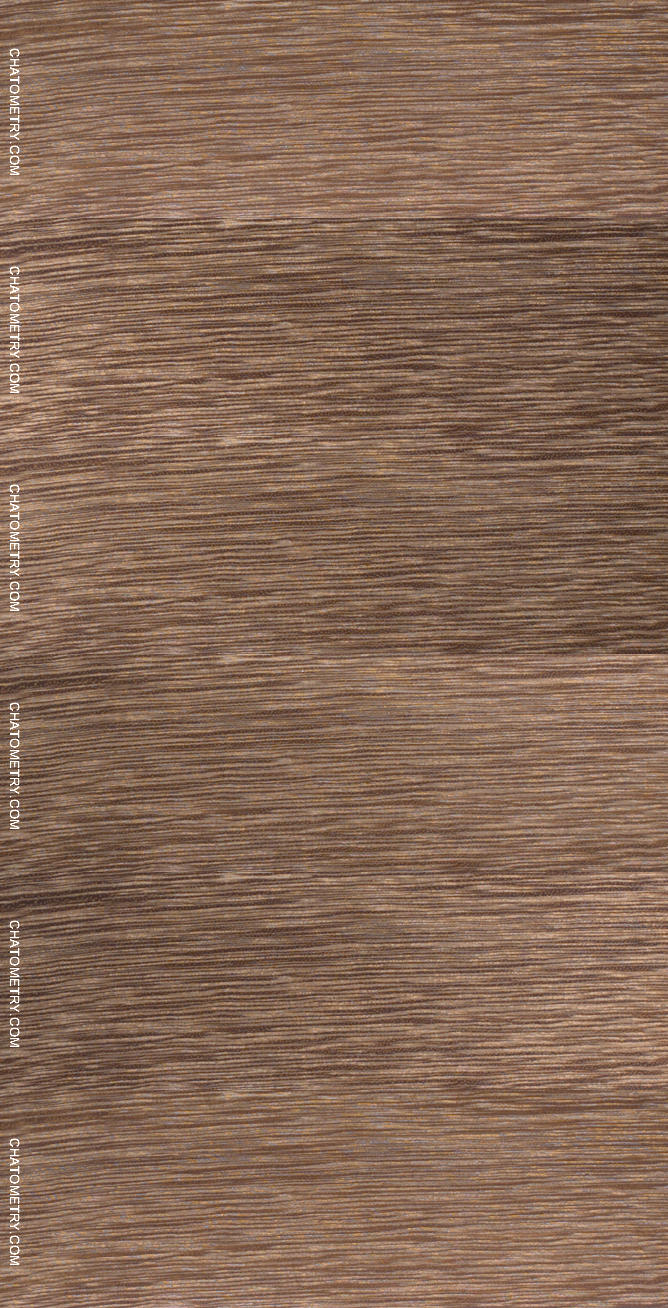
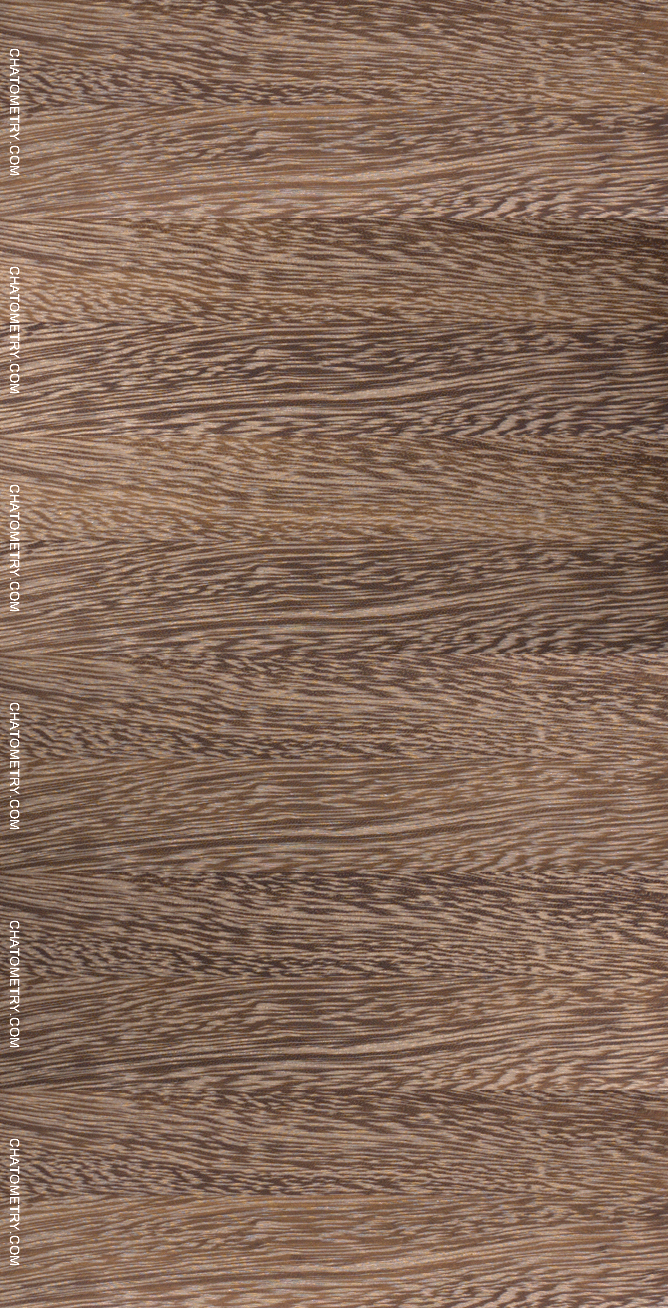
Notes: Wood dark brown, with thin light brown lines, which produce an attractive aspect. Presence of internal stresses.
Diameter: 40÷100cm
Density @12% MC: 920kg/m³
Janka Hardness: 2070lbf
Crushing Strength @12%MC: 82MPa
Static Bending Strength @12%MC: 148MPa
Longitudinal Modulus of Elasticity E: 19.78GPa
Volumetric Shrinkage Coefficient: 0.65% per %
Total Tangential Shrinkage TS: 6.5%
Total Radial Shrinkage TS: 4.2%
T/R Anisotropy Ratio: 1.5-
Fibre Saturation Point: 22%
Thermal Conductivity: 0.3W/mk
Lower Heating Value: 20270KJ/Kg
Sapwood Thickness: 2÷3cm
Sapwood Demarcation: Clearly demarcated
Resistance to Decay: Class 1 – very durable
Resistance to Dry Wood Borers: Class D – durable (sapwood demarcated, risk limited to sapwood)
Resistance to Termites: Class D – durable
Treatability: Class 3 – poorly treatable Atlas of Tropical Timber Species
Use Class Covered by Natural Durability: Class 4 – in ground or fresh water contact
Durability Notes: This species is listed in the NF EN 350 standard. This species naturally covers the use class 5 (wood permanently or regularly submerged in salt water, sea water or brackish water) due to its high specific gravity and its repulsive extract content. According to the European standard NF EN 335 of May 2013, performance length might be modified by conditions in which it is used.
Log Buoyancy: Does not float
Log Conservation: Good
Drying Rate: Normal to slow
Drying Risk of Distortion: Slight risk
Drying Risk of Case Hardening: No known specific risk
Drying Risk of Checking: Slight risk
Blunting Effect: Fairly high
Machining Tool: Tungsten carbide
Suitability for Peeling: Not recommended or without interest
Suitability for Slicing: Good
Sawing Machining Notes: Sawing and machining requires powerful equipment. Veneers quite brittle.
Assembly Nailing Screwing: Good but pre-boring necessary
Assembly Notes: High specific gravity: important that gluing be performed in compliance with the code of practice and instructions for the glue used.
Additional Notes: Due to its attractive appearance and low availability in forests, this wood should be, used for decorative end, uses or in small quantities
End Uses: Turned goods, Sliced veneer, Heavy carpentry, Bridges (parts in contact with water or, Ship building (planking and deck) ground), Cabinetry (high-end furniture), Bridges (parts not in contact with water, or ground), Stairs (inside), Poles, Panelling, Marquetry, Exterior joinery, Hydraulic works (seawater), Interior joinery, Sleepers, Built-in furniture or mobile item, Flooring
Source 1: Tropical Timber Atlas, Editions Quae, e-ISBN 978-2-7592-2770-9
Pictures – each from a different individual tree:
[Previous] —————— [Next]
Want to know more? Get Woodworker’s Guide to Chatoyance!


… and enjoy the read!