enterolobium cyclocarpum, Fabaceae, Angiospermae (Hardwood)
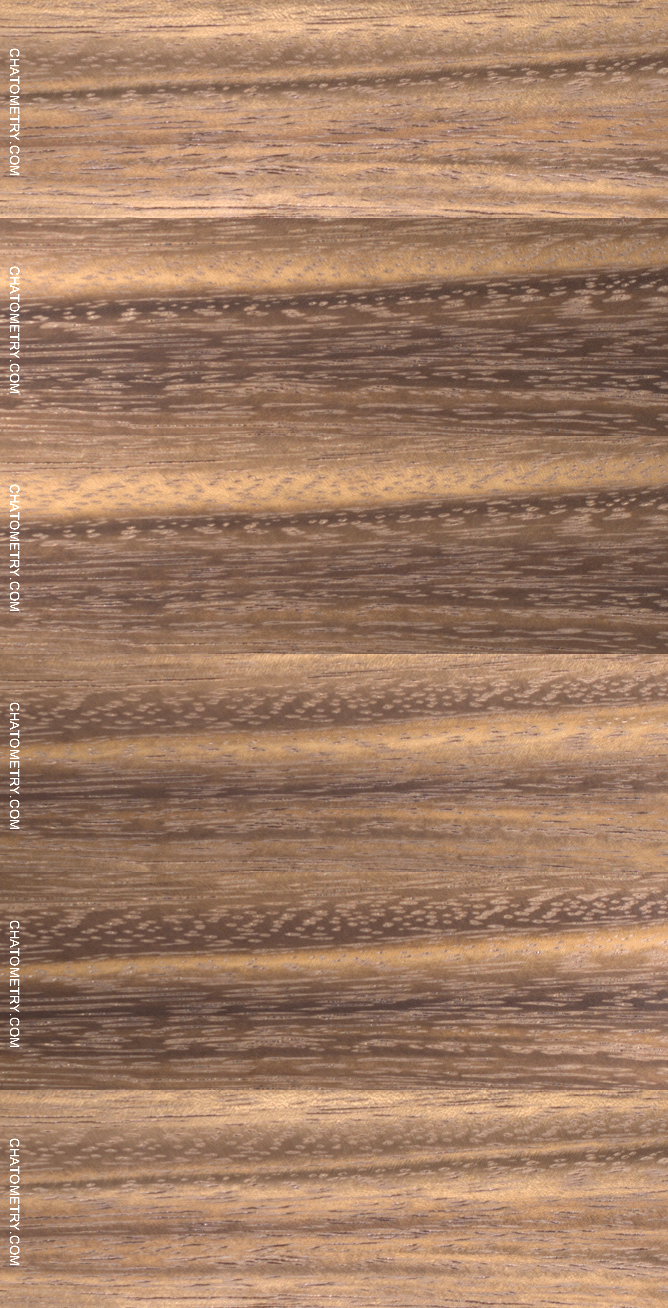
Other names: Camba-camby, Oreja de negro, Para, Timbo, Timbo colorado, Timbauba, Timbauva, Timbóuba, Carito, Orejero, Caro-caro
Chatoyance was measured by the chatometry.com team using the PZC method. The statistics for this specific timber are hereby summarized to provide an evaluation of data robustness:
Number of sources for samples: 6
Number of individual trees analyzed: 6
Number of specimens: 23
Number of measurements: 69
Max PZC read (of all measurements): 27.9
Min PZC read (of all measurements): 12.0
Max PZC average on one log: 27.0
Min PZC average on one log: 13.2
PZC Average of all logs: 20.5
Species: enterolobium cyclocarpum
Family: Fabaceae
Clade: Angiospermae
Description: Enterolobium cyclocarpum, commonly known as Guanacaste or Elephant Ear Tree, is a large, fast-growing tropical tree characterized by its feathery, bipinnate leaves, small puffball-like white flowers, and most distinctively, large, dark brown, woody, ear-shaped pods.
Other Local Names: Camba-camby, Oreja de negro, Para, Timbo, Timbo colorado, Timbauba, Timbauva, Timbo, Timbóuba, Carito, Orejero, Timbo, Timbo colorado, Caro-caro
Reference Colour: Brown
Texture: Coarse
Grain: Straight or interlocked
Interlocked Grain: Slight
Notes: Heartwood light brown to brown. Possible presence of tension wood in Enterolobium cyclocarpum . Presence of tension wood in Enterolobium cyclocarpum .
Diameter: 60÷100cm
Density @12% MC: 490kg/m³
Janka Hardness: 630lbf
Crushing Strength @12%MC: 40MPa
Static Bending Strength @12%MC: 63MPa
Longitudinal Modulus of Elasticity E: 9.65GPa
Volumetric Shrinkage Coefficient: 0.35% per %
Total Tangential Shrinkage TS: 4.5%
Total Radial Shrinkage TS: 2.3%
T/R Anisotropy Ratio: 2-
Fibre Saturation Point: 24%
Thermal Conductivity: 0.17W/mk
Sapwood Thickness: 3÷6cm
Sapwood Demarcation: Clearly demarcated
Resistance to Decay: Class 5 – non-durable
Resistance to Dry Wood Borers: Class D – durable (sapwood demarcated, risk limited to sapwood)
Resistance to Termites: Class S – susceptible
Treatability: Class 1 – treatable Atlas of Tropical Timber Species
Use Class Covered by Natural Durability: Class 1 – inside (no risk of dampness)
Log Buoyancy: Floats
Log Conservation: Low (treatment necessary)
Drying Rate: Rapid
Drying Risk of Distortion: No risk or very slight risk
Drying Risk of Case Hardening: No known specific risk
Drying Risk of Checking: No risk or very slight risk
Blunting Effect: Normal
Machining Tool: Ordinary
Suitability for Peeling: Good
Suitability for Slicing: Good
Sawing Machining Notes: Sometimes fuzzy surface and irritant sawdust for the species E. cyclocarpum.
Assembly Nailing Screwing: Good
End Uses: Matches, Interior joinery, Framing, Built-in furniture or mobile item, Boxes and crates, Blockboard, Open boats, Sliced veneer, Veneer for back or face of plywood, Exterior panelling, Panelling
Source 1: Tropical Timber Atlas, Editions Quae, e-ISBN 978-2-7592-2770-9
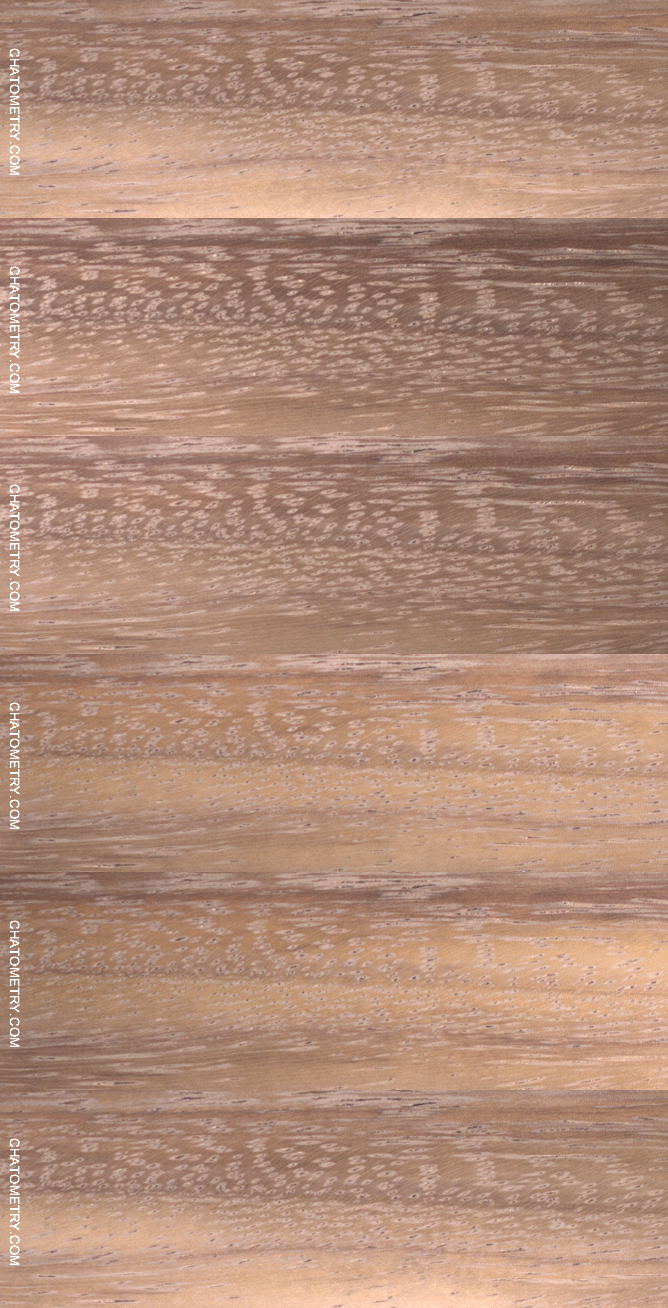
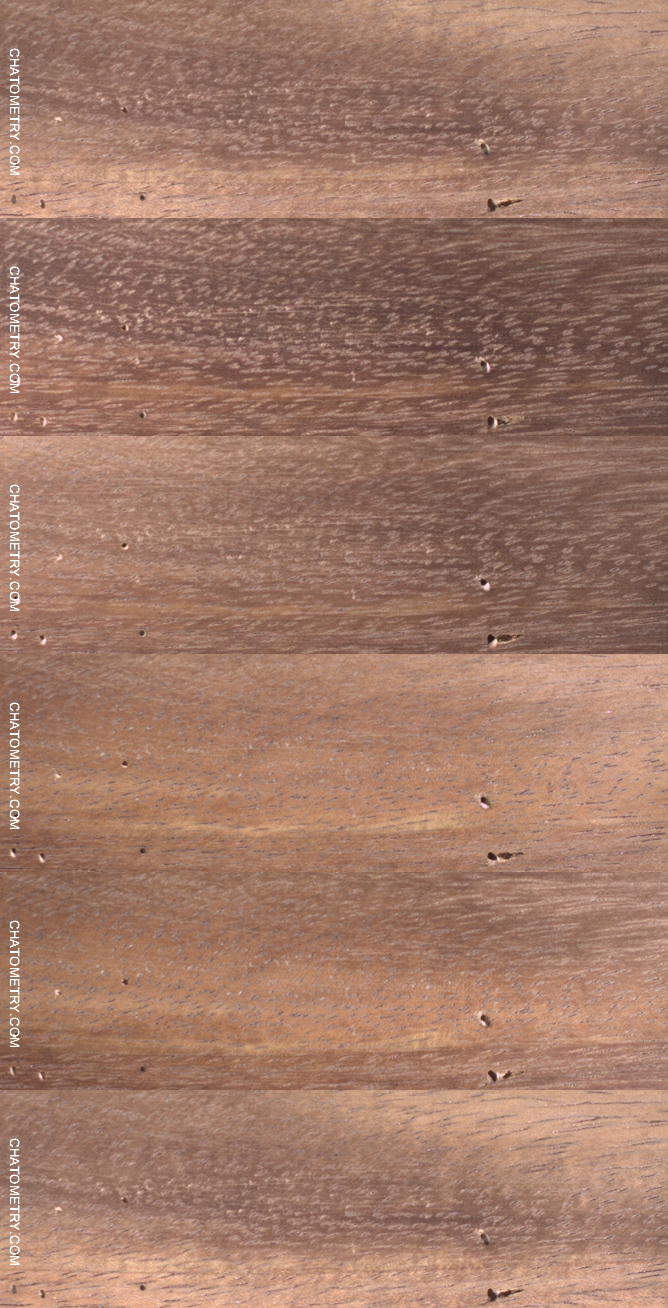
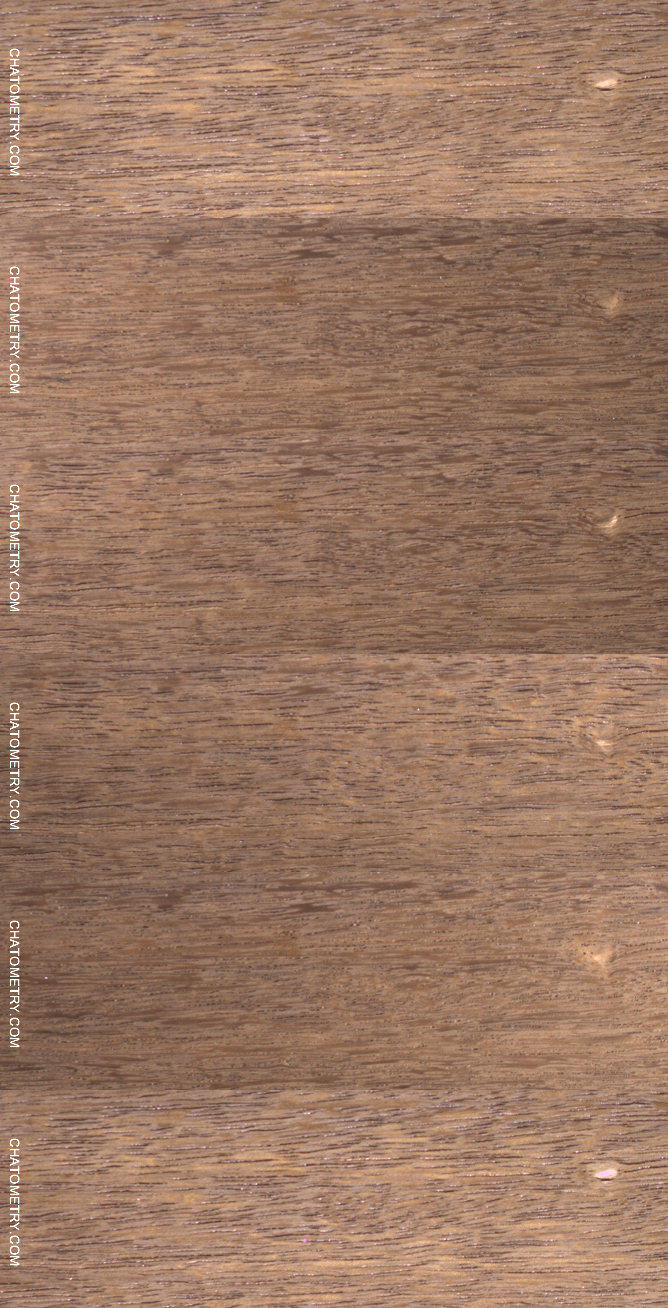
Pictures – each from a different individual tree:


See also
FINISHING GUANACASTE
[Previous] —————— [Next]
Want to know more? Get Woodworker’s Guide to Chatoyance!


… and enjoy the read!