Skip to content

PZC Chatometry

A standard system to measure wood chatoyance

Menu
  • Home
  • What is Chatoyance?
    • Curl
    • Ribbon Stripe
    • Other Figures
    • Flecks
    • Growth Rings
    • Knots
  • The PZC method
    • Scale example 1
    • Scale example 2
    • Scale example 3
    • Scale example 4
  • Woods
    • Summary Table
    • Africa
      • Abura
      • Afrormosia
      • Agba
      • Agba
      • Afzelia
      • Aniegre
      • Avodire
      • Azobe
      • Bilinga
      • Bilinga
      • Bomanga
      • Boire
      • Bubinga
      • Cola
      • Ebiara
      • Ebony, Gaboon
      • Etimoe
      • Faro
      • Faro
      • Framire
      • Guarea
      • Iroko
      • Lati
      • Khaya
      • Kosipo
      • Kotibe
      • Kotibe
      • Koto
      • Limba
      • Limba, Black
      • Makore
      • Mansonia
      • Moabi
      • Movingui
      • Niangon
      • Niove
      • Obeche
      • Ocotea
      • Ocotea
      • Ovangkol
      • Okoume
      • Padouk
      • Purpleheart
      • Ramin
      • Rosewood, African Blackwood
      • Rosewood, African Blackwood
      • Rosewood, Madagascar
      • Sapele
      • Sipo
      • Tali
      • Tiama
      • Wenge
      • Walnut, African
      • Zebrawood
    • Asia
      • Acacia, unspecified
      • Ailanthus
      • Albizia, unspecified
      • Alstonia
      • Artocarpus
      • Ash, Tamo
      • Bintangor
      • Bamboo
      • Camphor
      • Coconut
      • Ebony, Black and White
      • Ebony, Macassar
      • Fig, misc.
      • Kapur
      • Keruing
      • Mango
      • Meranti
      • Merbau
      • Mersawa
      • Narra
      • Paulownia
      • Rosewood, Indian
      • Satinwood
      • Sen
      • Sucupira
      • Teak
    • Europe
      • Alder
      • Apple
      • Ash, European
      • Ash, Olive
      • Beech, European
      • Birch
      • Birch, Karelian Burl
      • Black Locust
      • Bog Oak
      • Cedar, European
      • Cherry, Sweet
      • Chestnut, Horse
      • Chestnut, Sweet
      • Cypress, Mediterranean
      • Elm
      • Fir, European Silver
      • Hawthorn
      • Hazelnut
      • Hornbeam
      • Laburnum
      • Lagerstroemia
      • Larch, European
      • London Plane
      • Lime, European
      • Madrone
      • Maple, European
      • Mulberry
      • Oak, Sessile
      • Olive
      • Olive, Russian
      • Poplar, Yellow
      • Pine, Maritime
      • Pine, Swiss Stone
      • Pine, unspecified
      • Pear
      • Poplar
      • Spruce, Fiemme (Ciresa tonewood)
      • Sumac
      • Walnut, European
      • Yew
    • North America
      • Ash, American White
      • Alder, Red
      • Beech, North American
      • Beech, North American
      • Boxelder
      • Butternut
      • Catalpa
      • Cedar, Eastern Red
      • Cedar, Western Red
      • Cherry, Black
      • Cypress, Bald
      • Cypress, Lawson
      • Desert Ironwood
      • Desert Ironwood
      • Dogwood
      • Fir, Douglas
      • Giant Sequoia
      • Hackberry
      • Hemlock
      • Hickory
      • Holly
      • Honey Locust
      • Juniperus misc.
      • Koa
      • Magnolia
      • Maple, Bigleaf
      • Maple, Bigleaf
      • Maple, Hard
      • Mesquite
      • Mesquite
      • Oak, Red
      • Oak, White
      • Osage Orange
      • Osage Orange, Green
      • Red Gum
      • Pecan
      • Pecan
      • Redwood
      • Sassafras
      • Service Tree
      • Sycamore, American
      • Sycamore, American
      • Walnut, Black
      • Walnut, Claro
      • Walnut, Claro
      • Willow
    • Oceania
      • Agathis
      • Ash, Crow’s
      • Australian Blackwood
      • Black Bean
      • Cedar, Australian Red
      • Eucalyptus, unspecified
      • Ash, Mountain
      • Gum, River Red
      • Oak, Tasmanian
      • Jarrah
      • Maple, Queensland
      • Oak, Northern Silky
      • Oak, Southern Silky
      • Pine, Huon
      • She-Oak, River
      • Spotted Gum
      • Tasmanian Myrtle
      • Walnut, Queensland
    • South and Central America
      • Angelim
      • Araucaria
      • Aspidosperma
      • Bloodwood
      • Bocote
      • Canarywood
      • Carapa
      • Cedar, Spanish
      • Cerejeira
      • Chechen
      • Cumaru
      • Curupixa
      • Freijo
      • Garapa
      • Goncalo Alves
      • Goupie
      • Granadillo
      • Guanacaste
      • Guatambu
      • Imbuia
      • Ipe
      • Jacareuba
      • Jatoba
      • Jequitiba
      • Katalox
      • Leopardwood
      • Lignum Vitae
      • Louro Faia
      • Louro Preto
      • Mahogany, Cuban
      • Mahogany, Honduras
      • Massaranduba
      • Nothofagus
      • Osage Orange, Argentine
      • Pao Rosa
      • Peroba Rosa
      • Piquiarana
      • Podocarpus
      • Primavera
      • Rosewood, Brazilian
      • Rosewood, Cocobolo
      • Rosewood, Honduras
      • Rosewood, Kingwood
      • Rosewood, Santos
      • Tatajuba
      • Timbauba
      • Tineo
      • Tulipwood (Brazilian)
      • Ziricote
  • Case studies
  • Credits
  • Contacts
  • Services
  • Shop
    • Woodworker’s Guide to Chatoyance
    • Woodworker’s Guide to Chatoyance – Compact Edition

Jatoba

hymenaea courbaril, Fabaceae, Angiospermae (Hardwood)
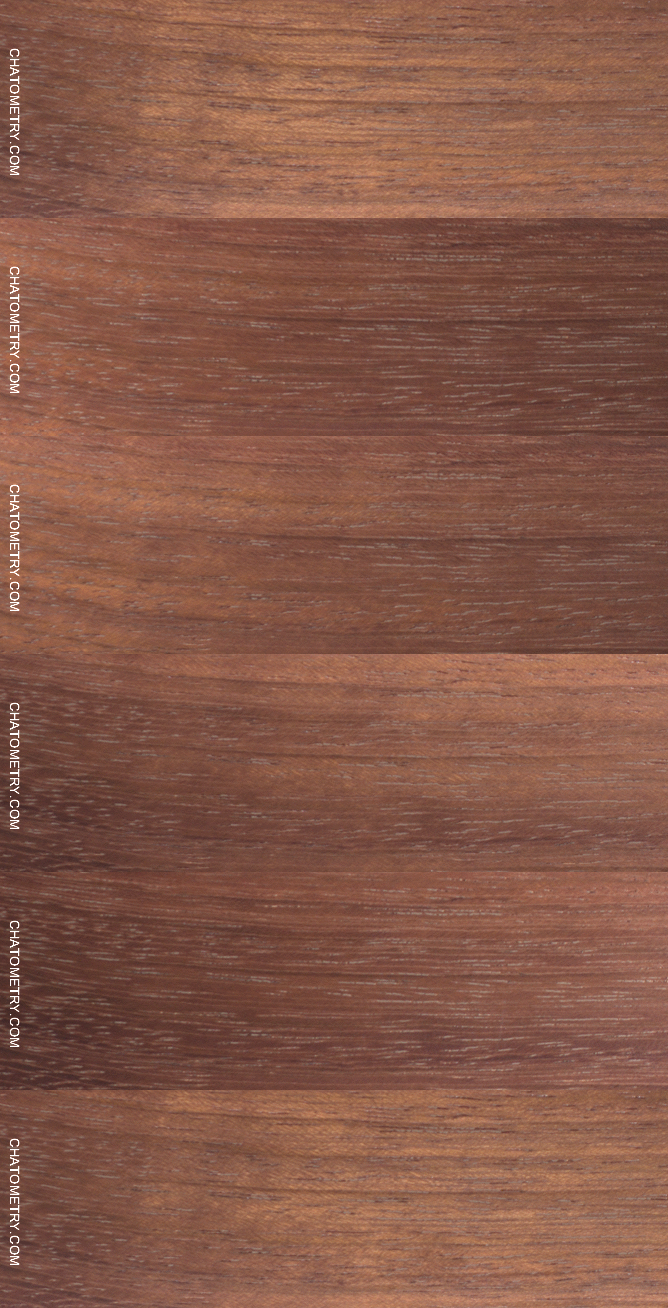
reference picture – see below for more pictures

Other names: Jatai, Jutai, Jutai açu, Jutai roxo, Algarrobo, Courbaril, Copalier, Locust, Guapinol, Azucar-huayo, Yutubanco, Rode lokus

Chatoyance was measured by the chatometry.com team using the PZC method. The statistics for this specific timber are hereby summarized to provide an evaluation of data robustness:
Number of sources for samples: 8
Number of individual trees analyzed: 8
Number of specimens: 16
Number of measurements: 48
Max PZC read (of all measurements): 24.3
Min PZC read (of all measurements): 11.5
Max PZC average on one log: 22.5
Min PZC average on one log: 12.1
PZC Average of all logs: 17.2

Species: hymenaea courbaril
Family: Fabaceae
Clade: Angiospermae
Description: Hymenaea courbaril, or Jatobá, is a large, semi-deciduous tree with distinctive two-leaflet leaves. It produces fragrant white flowers and large, woody brown pods containing seeds within a dry, mealy, pungent but edible pulp. Known for its dense hardwood and aromatic resin.
Other Local Names: Jatai, Jutai, Jutai açu, Jutai roxo, Algarrobo, Courbaril, Jatoba, Copalier, Locust, Courbaril, Guapinol, Azucar-huayo, Yutubanco, Locust, Rode lokus, Algarrobo

Reference Colour: Red brown
Texture: Medium
Grain: Straight or interlocked
Interlocked Grain: Slight
Notes: Wood has slight internal stresses. Colour can vary from purple brown or orangey brown to red brown with some veins.

Diameter: 50÷80cm
Density @12% MC: 940kg/m³
Janka Hardness: 3150lbf
Crushing Strength @12%MC: 97MPa
Static Bending Strength @12%MC: 160MPa
Longitudinal Modulus of Elasticity E: 23.46GPa
Volumetric Shrinkage Coefficient: 0.59% per %
Total Tangential Shrinkage TS: 7.5%
Total Radial Shrinkage TS: 3.9%
T/R Anisotropy Ratio: 1.9-
Fibre Saturation Point: 23%
Thermal Conductivity: 0.3W/mk
Lower Heating Value: 18920KJ/Kg
Sapwood Thickness: 3÷12cm
Sapwood Demarcation: Clearly demarcated

Resistance to Decay: Class 2-3 – durable to moderately durable
Resistance to Dry Wood Borers: Class D – durable (sapwood demarcated, risk limited to sapwood) JATOBÁ / ALGARROBO* Cross sections of Hymenaea courbaril
Resistance to Termites: Class M – moderately durable
Treatability: Class 4 – non-treatable
Use Class Covered by Natural Durability: Class 3 – not in ground contact, outside
Durability Notes: This species is listed in the NF EN 350 standard. Variable resistance to decay and termites depending on species. According to the European standard NF EN 335 of May 2013, performance length might be modified by conditions in which it is used.

Log Buoyancy: Does not float
Log Conservation: Moderate (treatment recommended)

Assembly Notes: High specific gravity: important that gluing be performed in compliance with the code of practice and instructions for the glue used.
Additional Notes: End uses in permanently humid conditions (water or ground contact) are possible, with species with very good durability
End Uses: Arched goods, Moulding, Turned goods, House framing, Shipbuilding (ribs), Flooring, Cabinetry (high-end furniture), Industrial or heavy flooring, Stairs (inside), Sliced veneer, Vehicle or container flooring, Decking, Musical instruments, Exterior panelling, Panelling, Sculpture, Tool handles (resilient woods), Marquetry, Exterior joinery, Cooperage, Built-in furniture or mobile item

Source 1: Tropical Timber Atlas, Editions Quae, e-ISBN 978-2-7592-2770-9

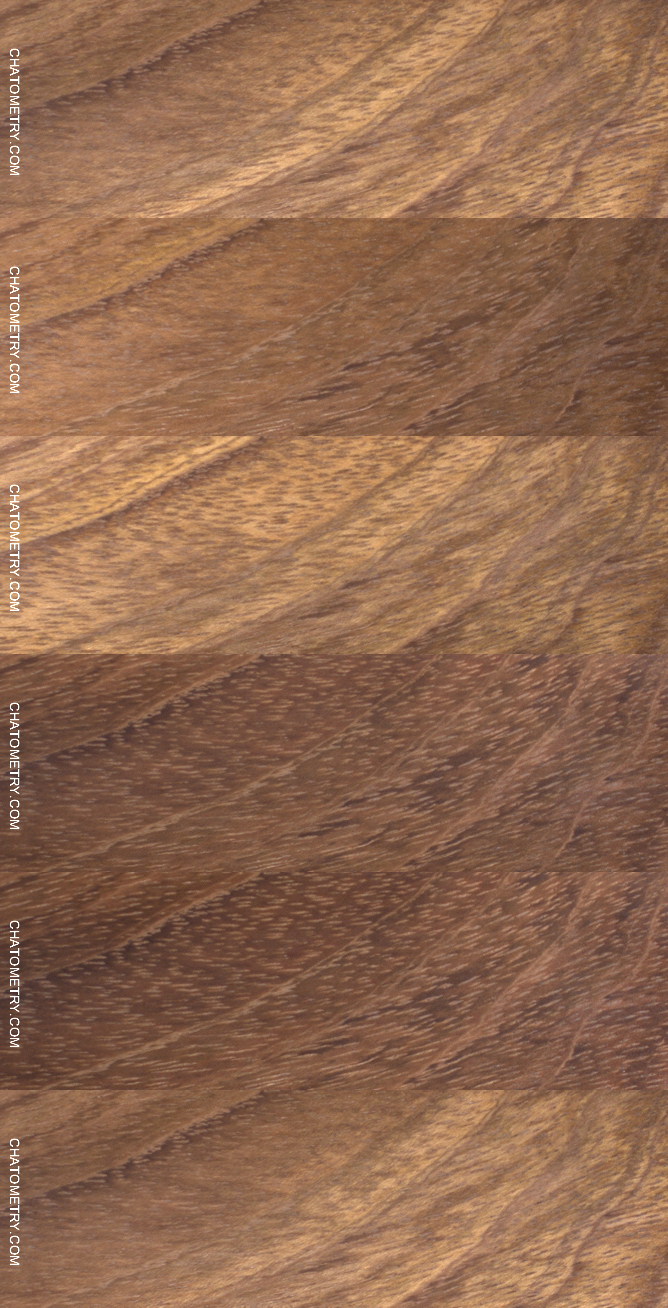
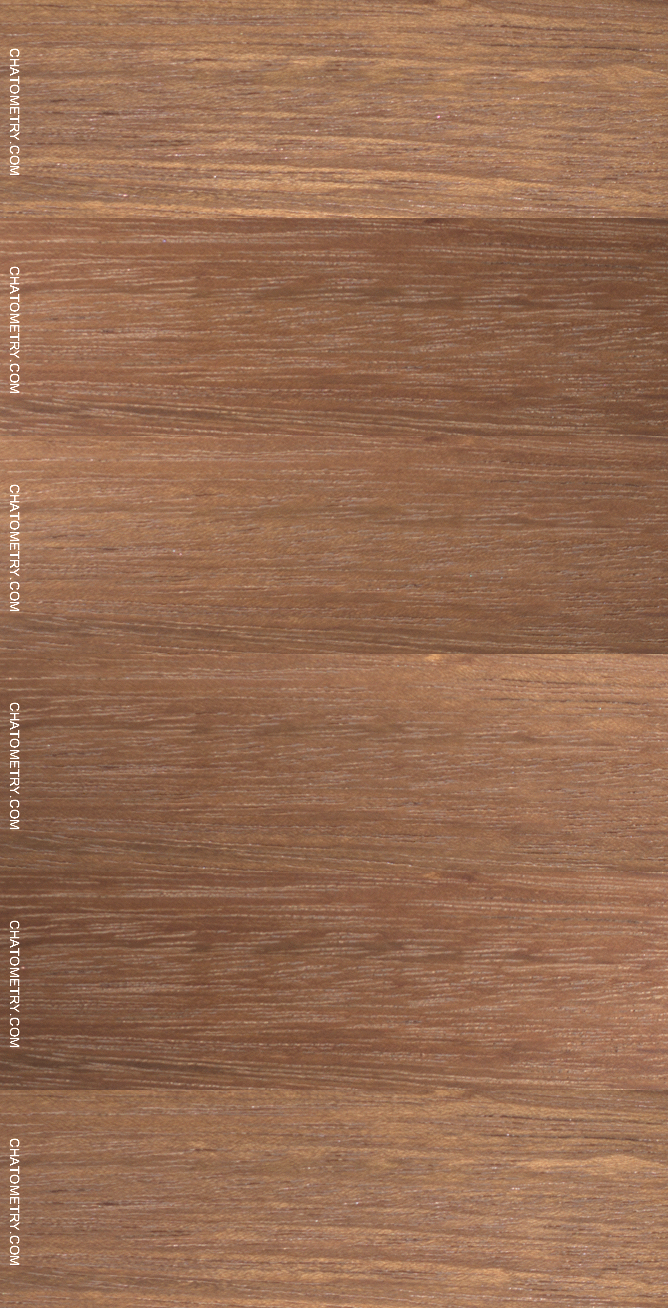
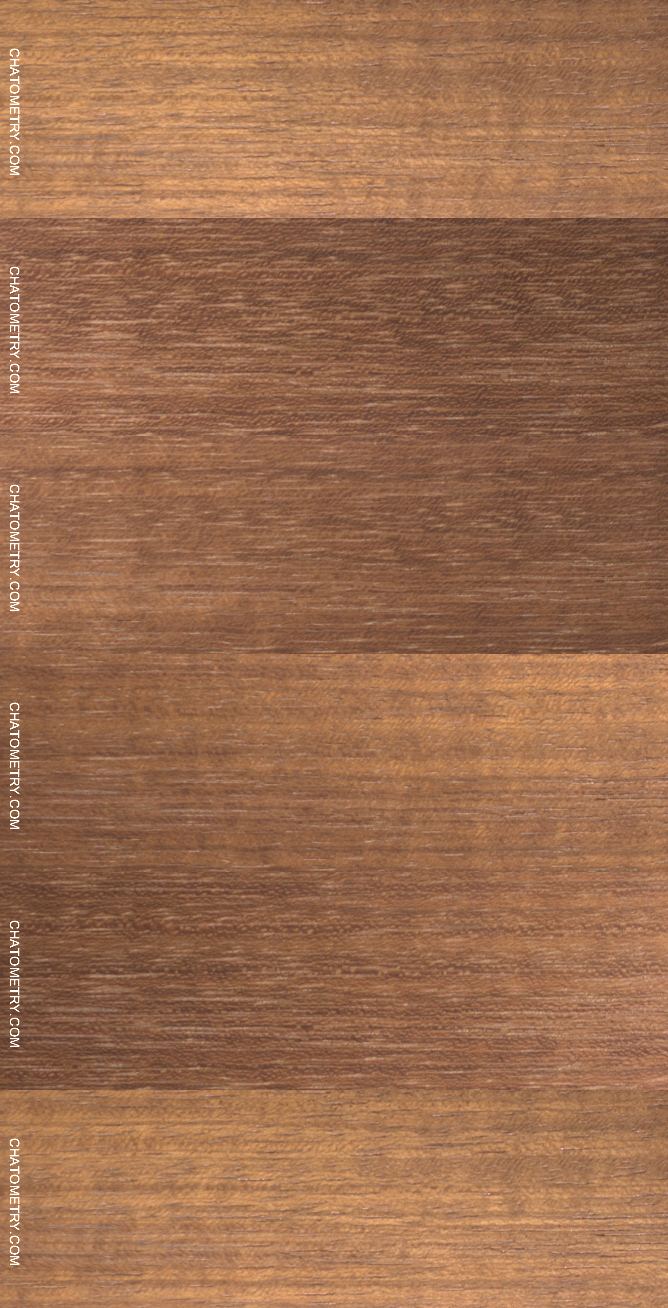
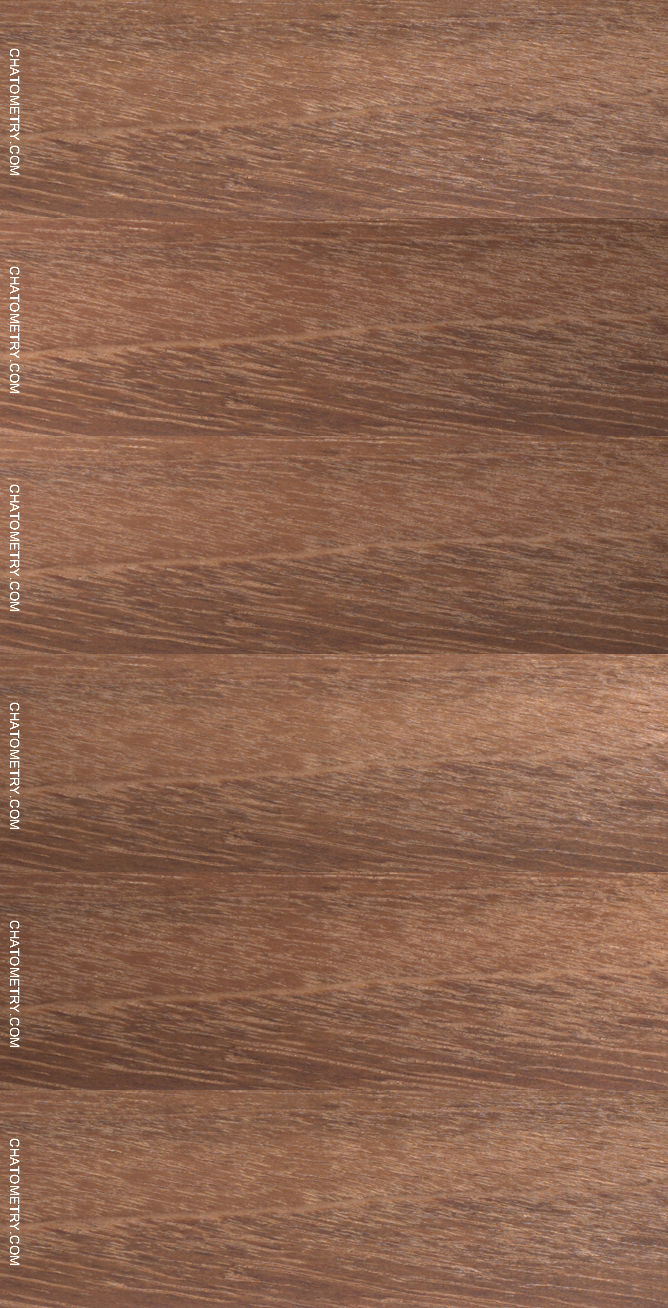
Pictures – each from a different individual tree:
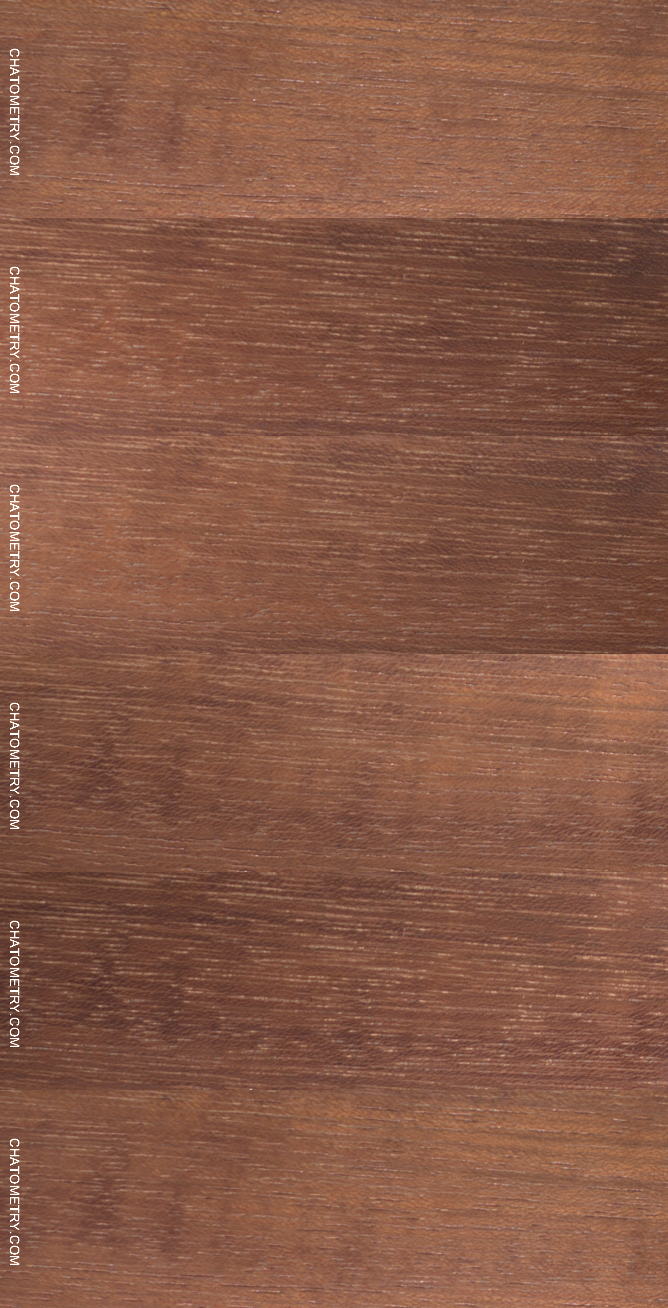
Log 1 (from FPL Parquet) – PZC = 14.8
Log 2 (from [Source 1]) – PZC = 22.4
Log 3 (from [Source 13]) – PZC = 17.3
Log 4 (from Re Parquet) – PZC = 16.0
Log 5 (from [Source 28]) – PZC = 22.5
Log 6 (from P. Hinds) – PZC = 11.9
Log 7 (from [Source 27]) – PZC = 16.1
Log 8 (H. Parvifolia from [Source 74]) – PZC = 16.8

[Previous] —————— [Next]

Want to know more? Get Woodworker’s Guide to Chatoyance!

… and enjoy the read!

Lascia un commento Annulla risposta

Il tuo indirizzo email non sarà pubblicato. I campi obbligatori sono contrassegnati *

PZC Chatometry 2026 . Powered by WordPress