Skip to content

PZC Chatometry

A standard system to measure wood chatoyance

Menu
  • Home
  • What is Chatoyance?
    • Curl
    • Ribbon Stripe
    • Other Figures
    • Flecks
    • Growth Rings
    • Knots
  • The PZC method
    • Scale example 1
    • Scale example 2
    • Scale example 3
    • Scale example 4
  • Woods
    • Summary Table
    • Africa
      • Abura
      • Afrormosia
      • Agba
      • Agba
      • Afzelia
      • Aniegre
      • Avodire
      • Azobe
      • Bilinga
      • Bilinga
      • Bomanga
      • Boire
      • Bubinga
      • Cola
      • Ebiara
      • Ebony, Gaboon
      • Etimoe
      • Faro
      • Faro
      • Framire
      • Guarea
      • Iroko
      • Lati
      • Khaya
      • Kosipo
      • Kotibe
      • Kotibe
      • Koto
      • Limba
      • Limba, Black
      • Makore
      • Mansonia
      • Moabi
      • Movingui
      • Niangon
      • Niove
      • Obeche
      • Ocotea
      • Ocotea
      • Ovangkol
      • Okoume
      • Padouk
      • Purpleheart
      • Ramin
      • Rosewood, African Blackwood
      • Rosewood, African Blackwood
      • Rosewood, Madagascar
      • Sapele
      • Sipo
      • Tali
      • Tiama
      • Wenge
      • Walnut, African
      • Zebrawood
    • Asia
      • Acacia, unspecified
      • Ailanthus
      • Albizia, unspecified
      • Alstonia
      • Artocarpus
      • Ash, Tamo
      • Bintangor
      • Bamboo
      • Camphor
      • Coconut
      • Ebony, Black and White
      • Ebony, Macassar
      • Fig, misc.
      • Kapur
      • Keruing
      • Mango
      • Meranti
      • Merbau
      • Mersawa
      • Narra
      • Paulownia
      • Rosewood, Indian
      • Satinwood
      • Sen
      • Sucupira
      • Teak
    • Europe
      • Alder
      • Apple
      • Ash, European
      • Ash, Olive
      • Beech, European
      • Birch
      • Birch, Karelian Burl
      • Black Locust
      • Bog Oak
      • Cedar, European
      • Cherry, Sweet
      • Chestnut, Horse
      • Chestnut, Sweet
      • Cypress, Mediterranean
      • Elm
      • Fir, European Silver
      • Hawthorn
      • Hazelnut
      • Hornbeam
      • Laburnum
      • Lagerstroemia
      • Larch, European
      • London Plane
      • Lime, European
      • Madrone
      • Maple, European
      • Mulberry
      • Oak, Sessile
      • Olive
      • Olive, Russian
      • Poplar, Yellow
      • Pine, Maritime
      • Pine, Swiss Stone
      • Pine, unspecified
      • Pear
      • Poplar
      • Spruce, Fiemme (Ciresa tonewood)
      • Sumac
      • Walnut, European
      • Yew
    • North America
      • Ash, American White
      • Alder, Red
      • Beech, North American
      • Beech, North American
      • Boxelder
      • Butternut
      • Catalpa
      • Cedar, Eastern Red
      • Cedar, Western Red
      • Cherry, Black
      • Cypress, Bald
      • Cypress, Lawson
      • Desert Ironwood
      • Desert Ironwood
      • Dogwood
      • Fir, Douglas
      • Giant Sequoia
      • Hackberry
      • Hemlock
      • Hickory
      • Holly
      • Honey Locust
      • Juniperus misc.
      • Koa
      • Magnolia
      • Maple, Bigleaf
      • Maple, Bigleaf
      • Maple, Hard
      • Mesquite
      • Mesquite
      • Oak, Red
      • Oak, White
      • Osage Orange
      • Osage Orange, Green
      • Red Gum
      • Pecan
      • Pecan
      • Redwood
      • Sassafras
      • Service Tree
      • Sycamore, American
      • Sycamore, American
      • Walnut, Black
      • Walnut, Claro
      • Walnut, Claro
      • Willow
    • Oceania
      • Agathis
      • Ash, Crow’s
      • Australian Blackwood
      • Black Bean
      • Cedar, Australian Red
      • Eucalyptus, unspecified
      • Ash, Mountain
      • Gum, River Red
      • Oak, Tasmanian
      • Jarrah
      • Maple, Queensland
      • Oak, Northern Silky
      • Oak, Southern Silky
      • Pine, Huon
      • She-Oak, River
      • Spotted Gum
      • Tasmanian Myrtle
      • Walnut, Queensland
    • South and Central America
      • Angelim
      • Araucaria
      • Aspidosperma
      • Bloodwood
      • Bocote
      • Canarywood
      • Carapa
      • Cedar, Spanish
      • Cerejeira
      • Chechen
      • Cumaru
      • Curupixa
      • Freijo
      • Garapa
      • Goncalo Alves
      • Goupie
      • Granadillo
      • Guanacaste
      • Guatambu
      • Imbuia
      • Ipe
      • Jacareuba
      • Jatoba
      • Jequitiba
      • Katalox
      • Leopardwood
      • Lignum Vitae
      • Louro Faia
      • Louro Preto
      • Mahogany, Cuban
      • Mahogany, Honduras
      • Massaranduba
      • Nothofagus
      • Osage Orange, Argentine
      • Pao Rosa
      • Peroba Rosa
      • Piquiarana
      • Podocarpus
      • Primavera
      • Rosewood, Brazilian
      • Rosewood, Cocobolo
      • Rosewood, Honduras
      • Rosewood, Kingwood
      • Rosewood, Santos
      • Tatajuba
      • Timbauba
      • Tineo
      • Tulipwood (Brazilian)
      • Ziricote
  • Case studies
  • Credits
  • Contacts
  • Services
  • Shop
    • Woodworker’s Guide to Chatoyance
    • Woodworker’s Guide to Chatoyance – Compact Edition

Boire

detarium spp., Fabaceae, Angiospermae (Hardwood)
reference picture – see below for more pictures

Other names: Amouk, Bodo, Boiré, Aboranzork, Énouk, Eñuk, Kapuyai

Chatoyance was measured by the chatometry.com team using the PZC method. The statistics for this specific timber are hereby summarized to provide an evaluation of data robustness:
Number of sources for samples: 5
Number of individual trees analyzed: 5
Number of specimens: 14
Number of measurements: 45
Max PZC read (of all measurements): 28.1
Min PZC read (of all measurements): 12.2
Max PZC average on one log: 25.2
Min PZC average on one log: 14.2
PZC Average of all logs: 18.6

Species: detarium spp.
Family: Fabaceae
Clade: Angiospermae
Description: Medium-sized tree native to tropical Africa, characterized by alternate, pinnately compound leaves, small flowers, and edible, fleshy drupes with a hard stone.
Other Local Names: Amouk, Bodo, Boiré, Aboranzork, Énouk, Eñuk, Kapuyai

Reference Colour: Red brown
Texture: Medium to coarse
Grain: Straight or interlocked
Interlocked Grain: Marked
Notes: Coppery brown wood with dark brown veins. Resin exudation is possible.

Diameter: 70÷100cm
Density @12% MC: 660kg/m³
Janka Hardness: 1170lbf
Crushing Strength @12%MC: 55MPa
Static Bending Strength @12%MC: 99MPa
Longitudinal Modulus of Elasticity E: 13.1GPa
Volumetric Shrinkage Coefficient: 0.38% per %
Total Tangential Shrinkage TS: 5.4%
Total Radial Shrinkage TS: 3.8%
T/R Anisotropy Ratio: 1.4-
Fibre Saturation Point: 24%
Thermal Conductivity: 0.22W/mk
Sapwood Thickness: 7÷10cm
Sapwood Demarcation: Clearly demarcated

Resistance to Decay: Class 3 – moderately durable
Resistance to Dry Wood Borers: Class D – durable (sapwood demarcated, risk limited to sapwood)
Resistance to Termites: Class M – moderately durable
Treatability: Class 2 – moderately treatable.
Use Class Covered by Natural Durability: Class 2 – inside or under cover (dampness possible) MAMBODÉ
Durability Notes: This wood is given as not very sensitive to marine borers.

Log Buoyancy: Floats
Log Conservation: Moderate (treatment recommended)

Sawing Machining Notes: Some difficulties with sawing and machining due to presence of resin. Tools must always be carefully sharpened.
Assembly Notes: Resin exudations: to be taken into account when gluing.
Additional Notes: Filling is recommended to obtain a good finish
End Uses: Turned goods, Interior joinery, Coffins, Built-in furniture or mobile item, Cabinetry (high-end furniture), Flooring, Stairs (inside), Sliced veneer, Panelling, Marquetry, Exterior joinery

Source 1: Tropical Timber Atlas, Editions Quae, e-ISBN 978-2-7592-2770-9

Pictures – each from a different individual tree:
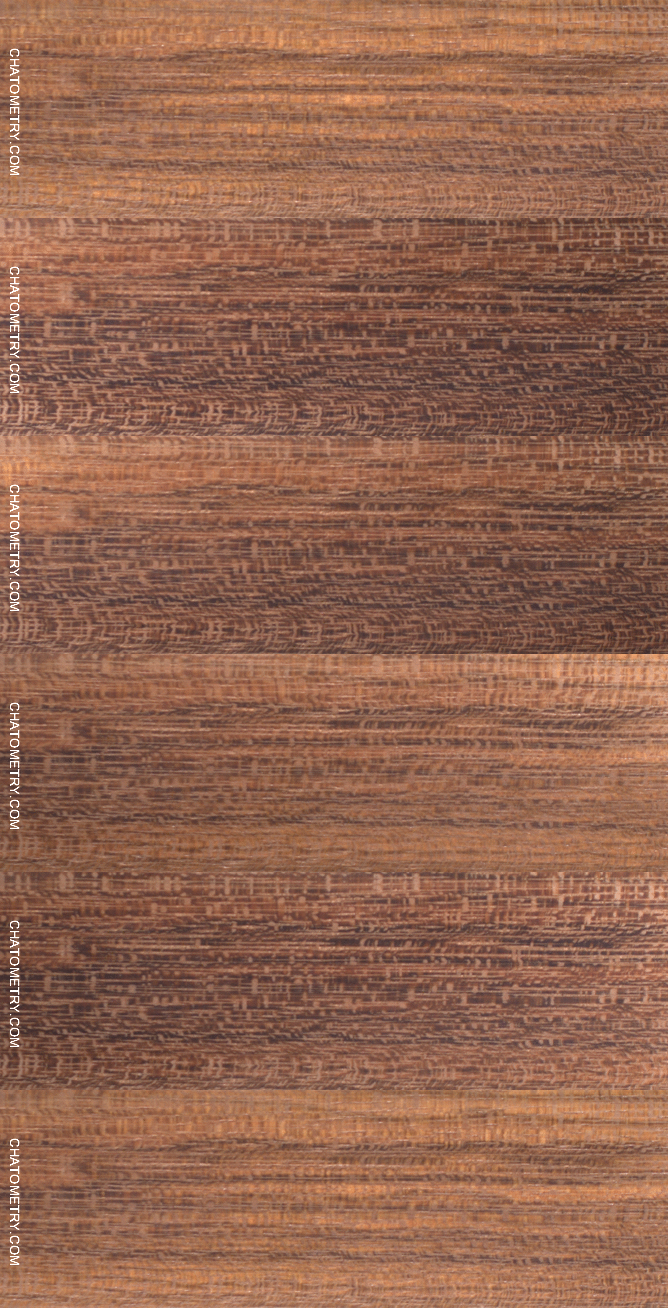
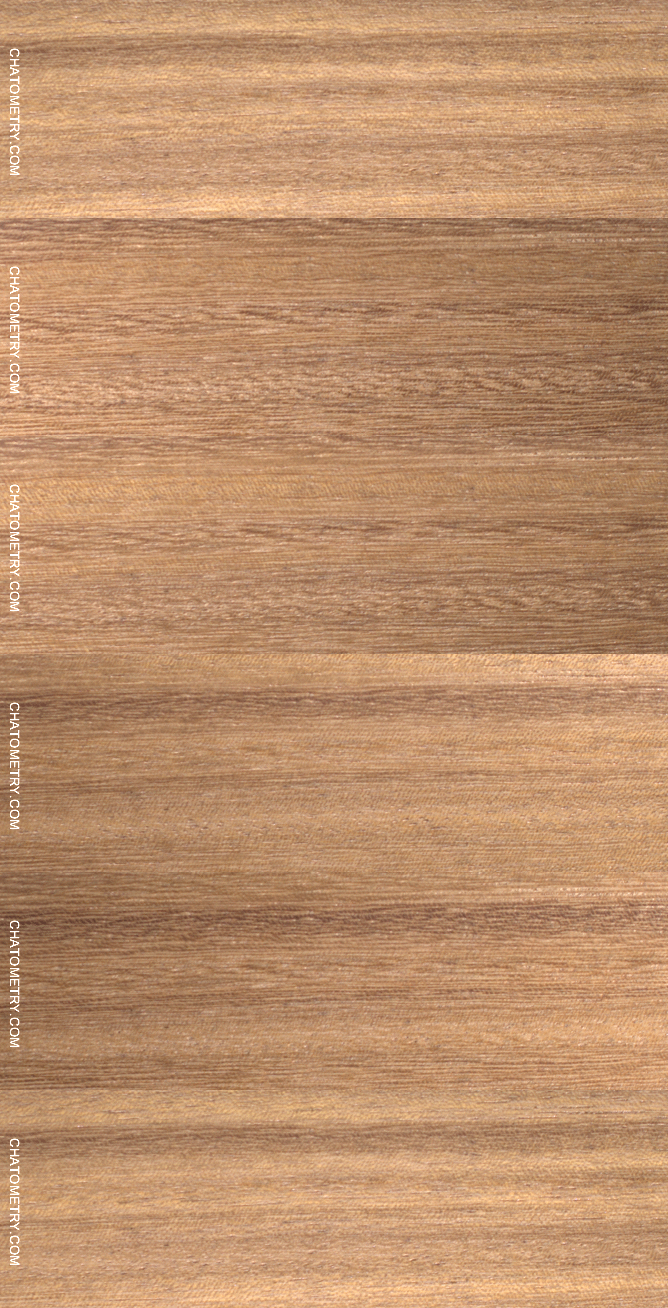
Log 1 (from [Source 42]) – PZC = 17.1
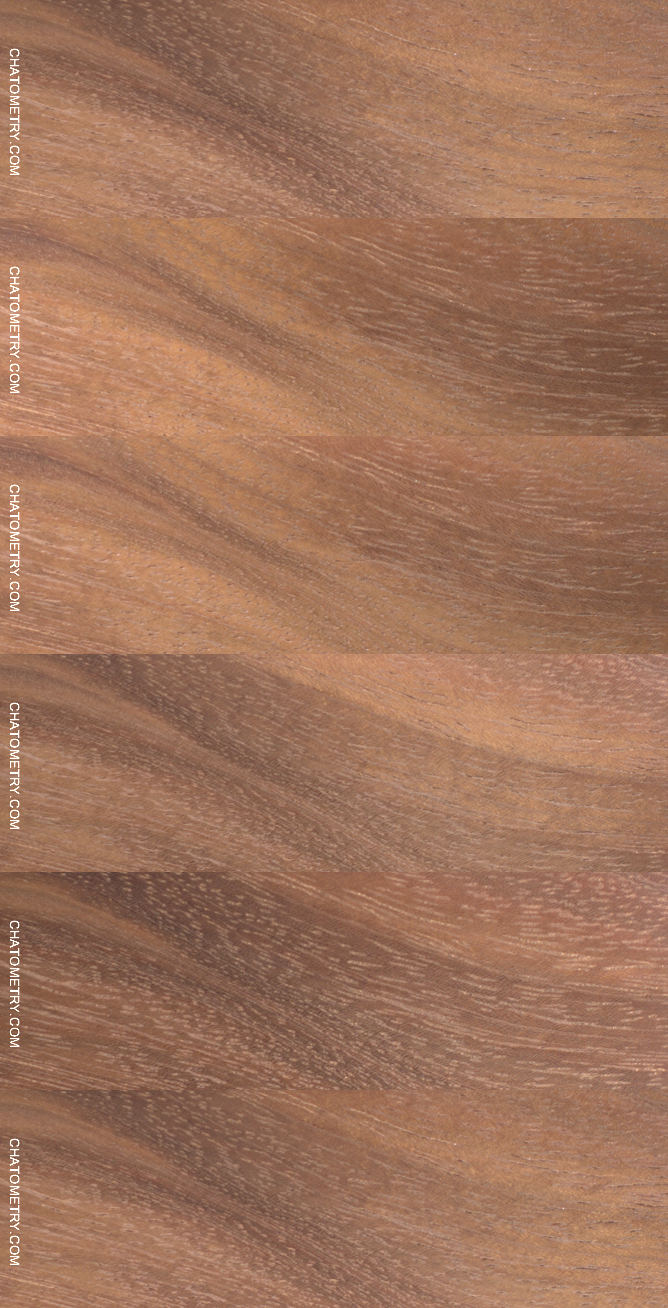
Log 2 (D. Senegalensis from [Source 27]) – PZC = 22.3
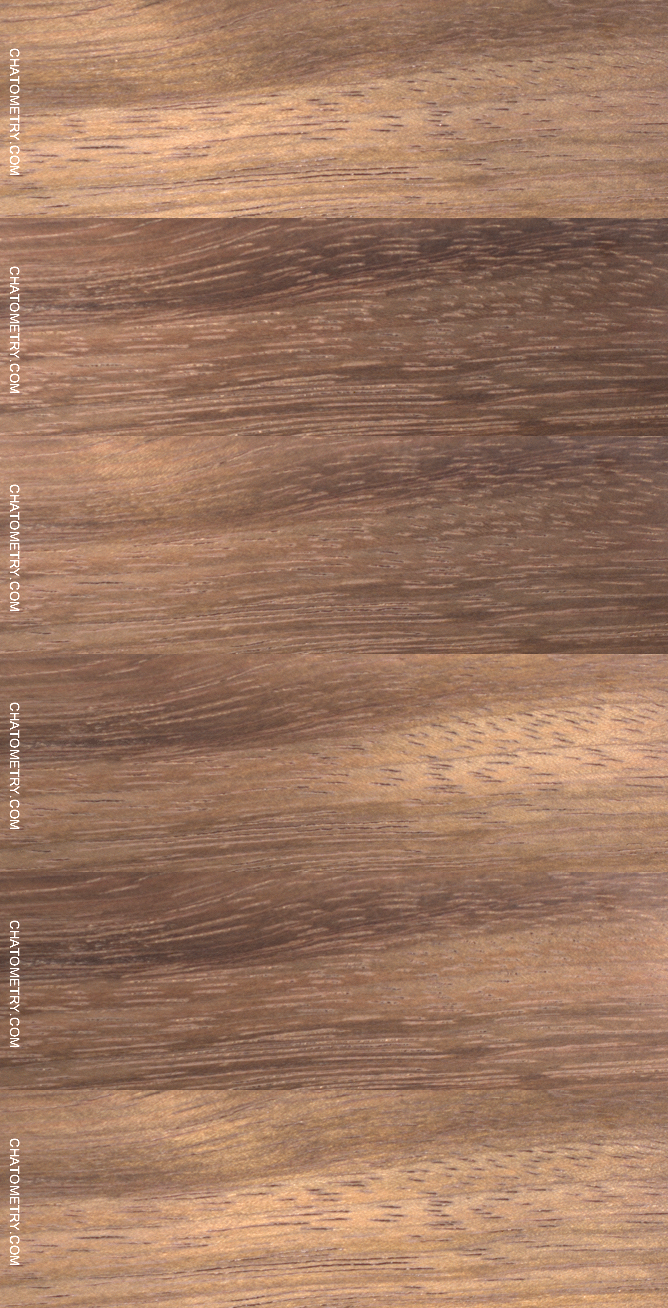
Log 3 (D. Senegalensis from [Source 53]) – PZC = 14.3
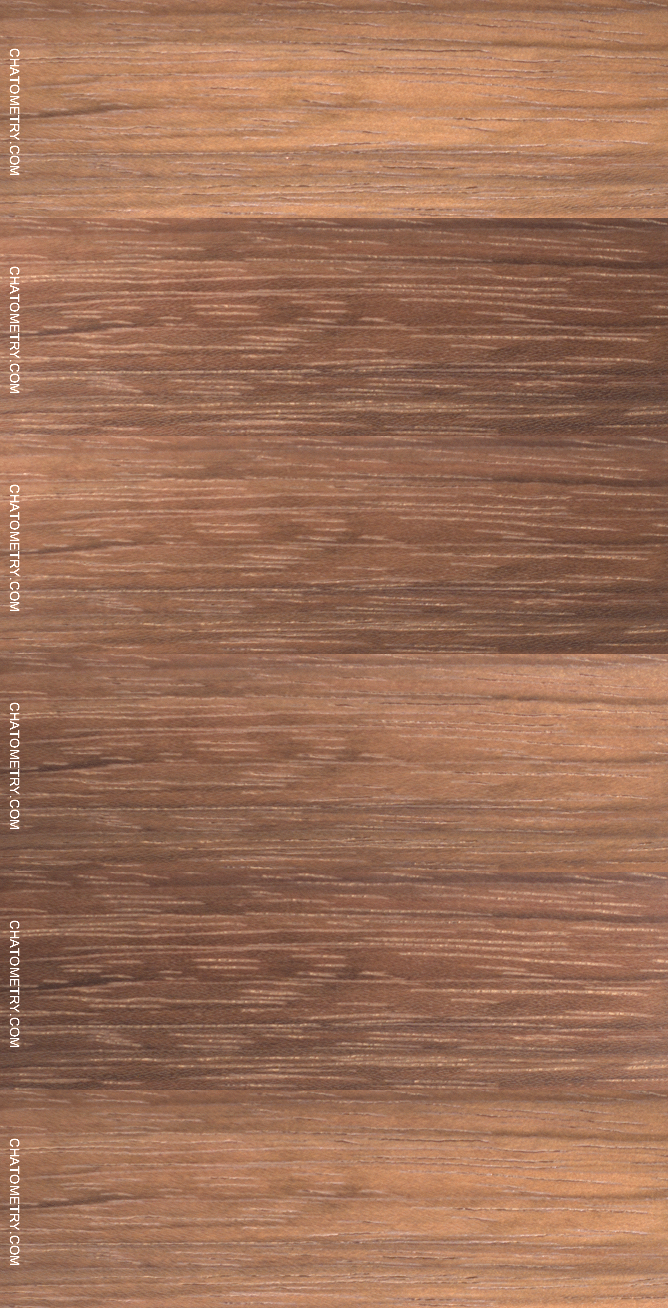
Log 4 (D. Senegalensis from [Source 58]) – PZC = 13.8
Log 5 (D. Macrocarpum from Joey Montagut) – PZC = 24.3

[Previous] —————— [Next]

Want to know more? Get Woodworker’s Guide to Chatoyance!

… and enjoy the read!

Lascia un commento Annulla risposta

Il tuo indirizzo email non sarà pubblicato. I campi obbligatori sono contrassegnati *

PZC Chatometry 2026 . Powered by WordPress