vatica spp., cottlelobium spp., Dipterocarpaceae, Angiospermae (Hardwood)
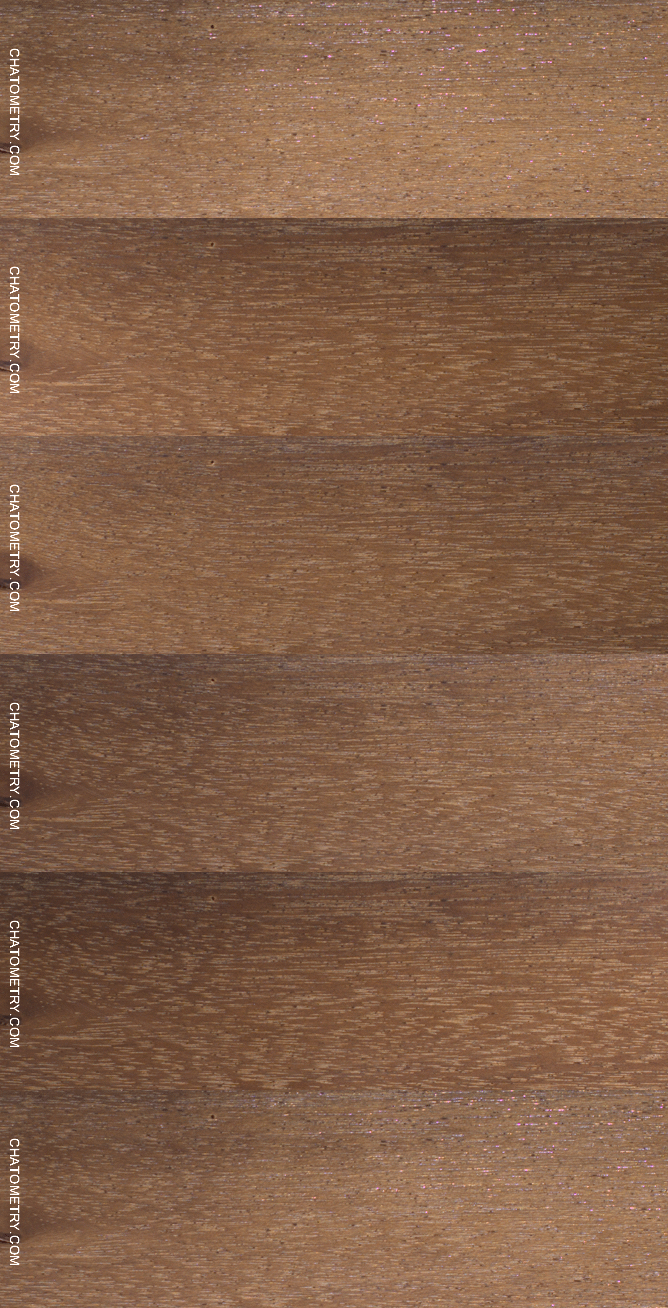
Other names: Chramas, Pan-thya, Narig, Pau cham, Tâu
Chatoyance was measured by the chatometry.com team using the PZC method. The statistics for this specific timber are hereby summarized to provide an evaluation of data robustness:
Number of sources for samples: 1
Number of individual trees analyzed: 1
Number of specimens: 2
Number of measurements: 6
Max PZC read (of all measurements): 17.1
Min PZC read (of all measurements): 14.8
Max PZC average on one log: 15.6
Min PZC average on one log: 15.6
PZC Average of all logs: 15.6
Species: vatica spp., cottlelobium spp.
Family: Dipterocarpaceae
Clade: Angiospermae
Description: Vatica spp.:
Tropical rainforest trees (Dipterocarpaceae) characterized by simple, leathery leaves and distinctive nut-like fruits with 2-5 persistent, often unequal, wings. Many species are valued for timber and resin.
Cottlelobium spp. (assuming Cotylelobium spp.):
Medium to large tropical rainforest trees (Dipterocarpaceae) with simple, leathery leaves and nut-like fruits typically bearing 2-3 prominent, often unequal, persistent wings.
Other Local Names: Chramas, Pan-thya, Narig, Pau cham, Tâu
Reference Colour: Red brown
Texture: Fine
Grain: Straight or interlocked
Interlocked Grain: Slight
Notes: Sapwood more or less distinct depending on the species, whitish to yellowish. Heartwoood pale yellow when fresh, darkens to deep reddish chocolate brown to brown with a greenish tinge. Silver figure visible. Resin exudations. Silica deposits.
Diameter: 80÷100cm
Density @12% MC: 800kg/m³
Janka Hardness: 1680lbf
Crushing Strength @12%MC: 50MPa
Static Bending Strength @12%MC: 85MPa
Longitudinal Modulus of Elasticity E: 19.5GPa
Volumetric Shrinkage Coefficient: 0.45% per %
Total Tangential Shrinkage TS: 4.7%
Total Radial Shrinkage TS: 2.6%
T/R Anisotropy Ratio: 1.8-
Fibre Saturation Point: 22%
Thermal Conductivity: 0.26W/mk
Lower Heating Value: 18240KJ/Kg
Sapwood Thickness: 5÷10cm
Sapwood Demarcation: Not clearly demarcated
Resistance to Decay: Class 2 – durable
Resistance to Dry Wood Borers: Class D – durable (heartwood durable but sapwood not clearly demarcated)
Resistance to Termites: Class D – durable
Treatability: Class 4 – non-treatable
Use Class Covered by Natural Durability: Class 3 – not in ground contact, outside
Log Buoyancy: Does not float
Log Conservation: Moderate (treatment recommended)
Drying Rate: Normal to slow
Drying Risk of Distortion: Slight risk
Drying Risk of Case Hardening: No known specific risk
Drying Risk of Checking: Slight risk
Blunting Effect: Fairly high
Machining Tool: Tungsten carbide
Suitability for Peeling: Not recommended or without interest
Suitability for Slicing: Not recommended or without interest
Assembly Nailing Screwing: Good but pre-boring necessary
Assembly Notes: High specific gravity: important that gluing be performed in compliance with the code of practice and instructions for the glue used.
Additional Notes: Difficulties with finishing caused by resin. Possible substitute for Red Balau and, Giam. Technological properties variable depending on the species
End Uses: Framing, Exterior joinery, Shipbuilding, Interior joinery, Open boats, House framing, Stairs (inside), Flooring, Glued Laminated, Decking
Source 1: Tropical Timber Atlas, Editions Quae, e-ISBN 978-2-7592-2770-9
[Previous] —————— [Next]
Want to know more? Get Woodworker’s Guide to Chatoyance!


… and enjoy the read!