entandrophragma cylindricum, Meliaceae, Angiospermae (Hardwood)

Other names: Sapelli-mahogany, Undianuno, Assié, Assié-sapelli, Aboudikro, Penkwa, Sapelewood, Muyovu, M’boyo, Lifaki
Chatoyance was measured by the chatometry.com team using the PZC method. The statistics for this specific timber are hereby summarized to provide an evaluation of data robustness:
Number of sources for samples: 13
Number of individual trees analyzed: 18
Number of specimens: 57
Number of measurements: 171
Max PZC read (of all measurements): 25.4
Min PZC read (of all measurements): 12.8
Max PZC average on one log: 24.5
Min PZC average on one log: 14.1
PZC Average of all logs: 20.4
Reference Colour: Red brown ref
Texture: Fine ref
Grain: Interlocked grain ref
Interlocked Grain: Slight to very marked ref
Notes: Wood pinkish brown to copper red brown. Cedar scent. Possible presence of ring shakes and blister grains (longitudinal fissures in the shape of barley grain on the curved surface of Quarter sawn round timber, generally concealed by the bark and linked to a dysfunction in tree growth). ref
Diameter: 70÷120cm ref
Density @12% MC: 690kg/m³ ref
Janka Hardness: 1260lbf ref
Crushing Strength @12%MC: 62MPa ref
Static Bending Strength @12%MC: 102MPa ref
Longitudinal Modulus of Elasticity E: 13.96GPa ref
Volumetric Shrinkage Coefficient: 0.47% per % ref
Total Tangential Shrinkage TS: 7.2% ref
Total Radial Shrinkage_TS: 5% ref
T/R Anisotropy_Ratio: 1.4- ref
Fibre Saturation Point: 29% ref
Thermal Conductivity: 0.23W/mk ref
Lower Heating Value: 17810KJ/Kg ref
Sapwood Thickness: 4÷8cm ref
Sapwood Demarcation: Clearly demarcated ref
Resistance_to_Decay: Class 3 – moderately durable ref
Resistance_to_Dry_Wood_Borers: Class D – durable (sapwood demarcated, risk limited to sapwood) ref
Resistance_to_Termites: Class M – moderately durable ref
Treatability: Class 3 – poorly treatable ref
Use Class Covered by_Natural Durability: Class 2 – inside or under cover (dampness possible) ref
Durability Notes: This species is listed in the NF EN 350 standard. ref
Log Buoyancy: Floats ref
Log Conservation: Moderate (treatment recommended) ref
Drying Rate: Normal ref
Drying Risk of Distortion: High risk ref
Drying Risk of Case Hardening: No known specific risk ref
Drying Risk of Checking: Slight risk ref
Blunting Effect: Normal ref
Machining Tool: Ordinary ref
Suitability for Peeling: Good ref
Suitability for Slicing: Good ref
Sawing Machining Notes: Prone to tearing in planing (interlocked grain). ref
Assembly Nailing Screwing: Good ref
Assembly Notes: Can stain when gluing. ref
Additional Notes: Light and regular interlocked grain: appreciated for slicing. Highly interlocked grain, troublesome for some end, uses ref
Pictures – each from a different individual tree:
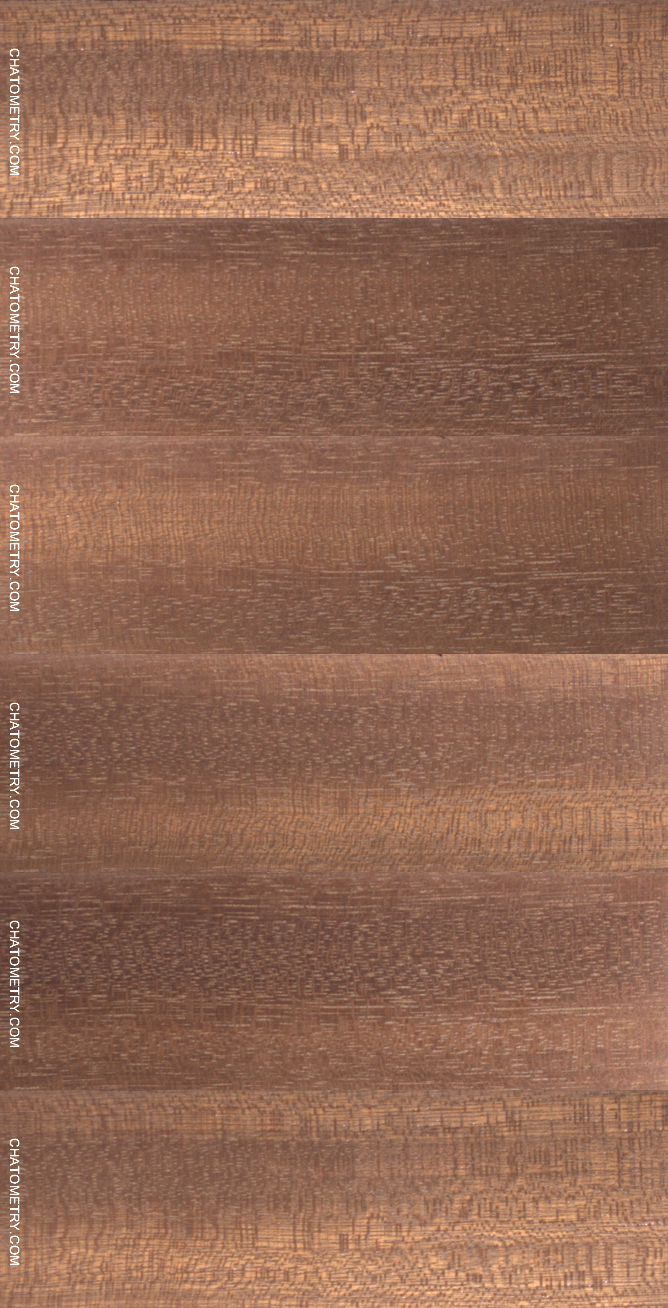
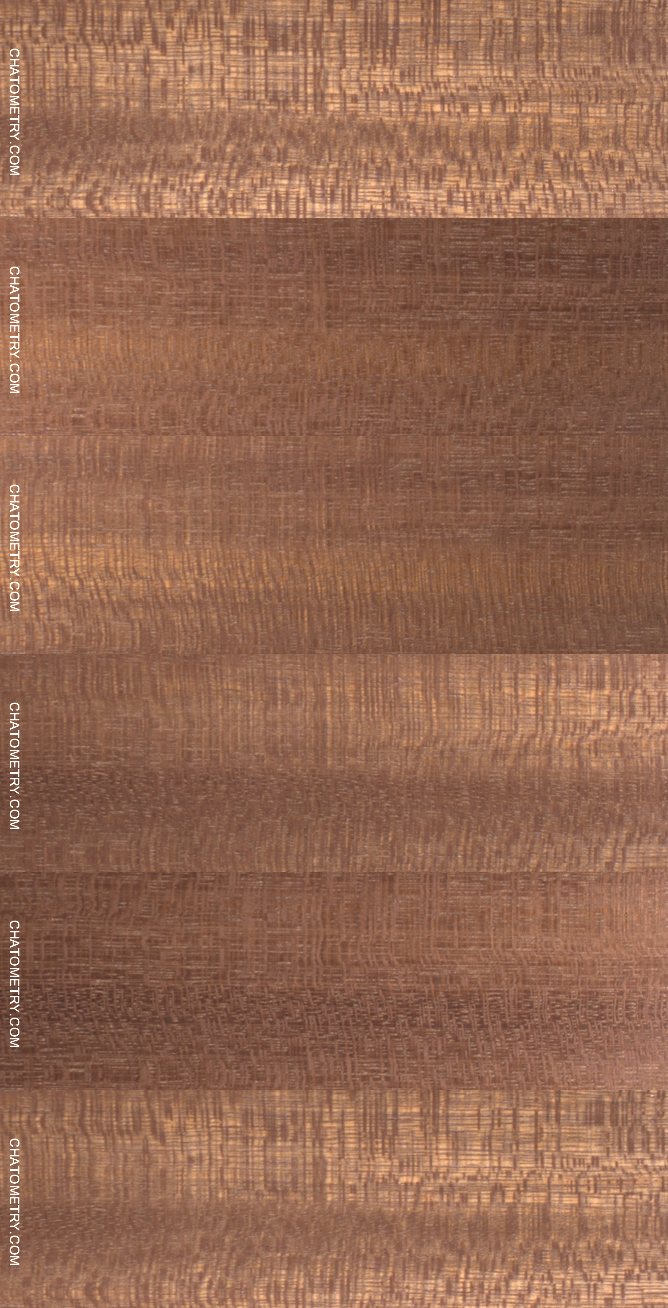
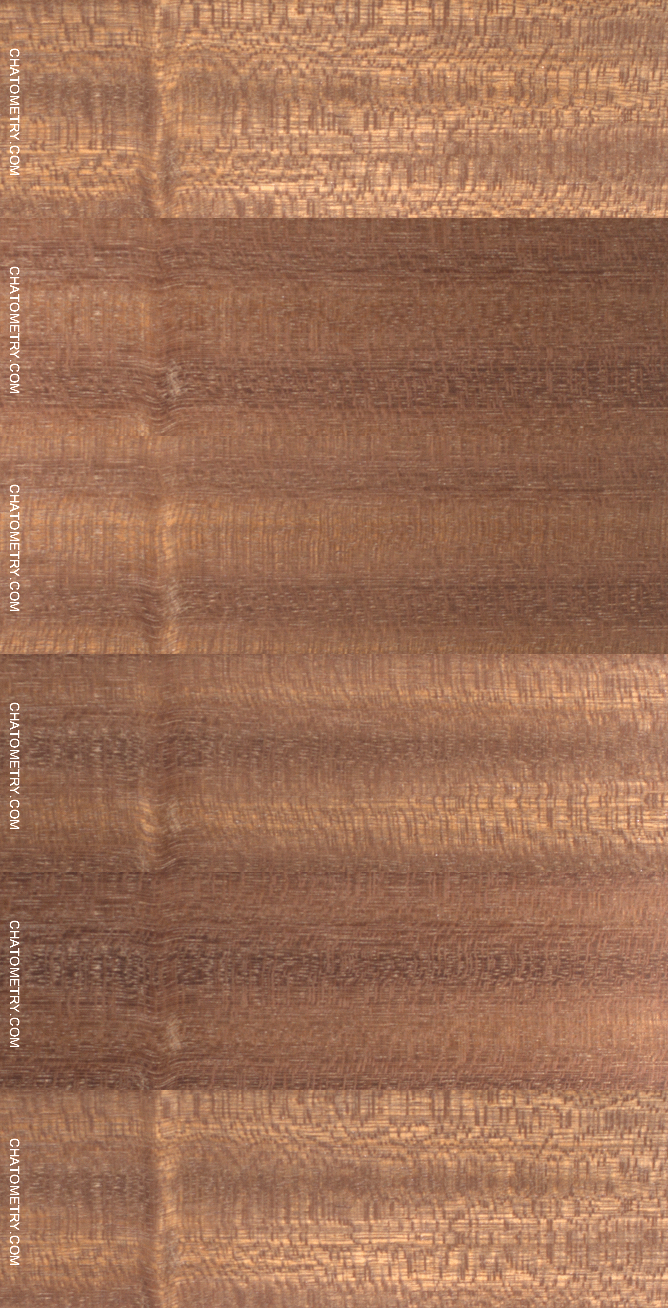

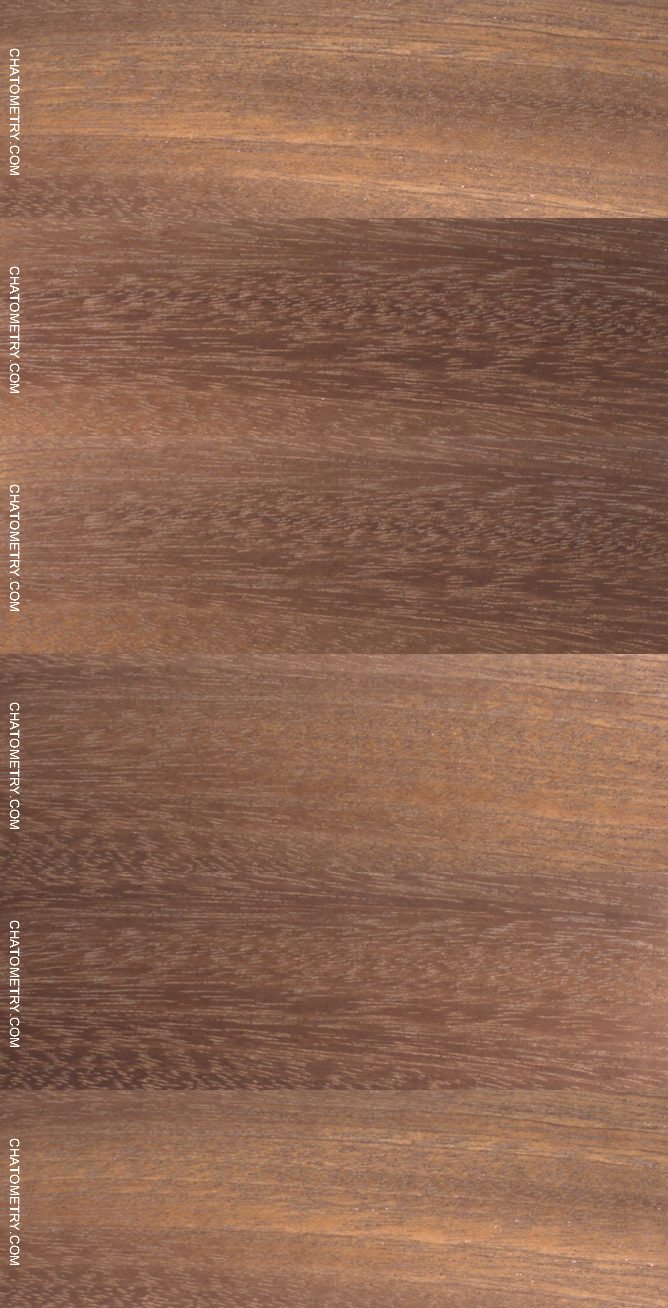
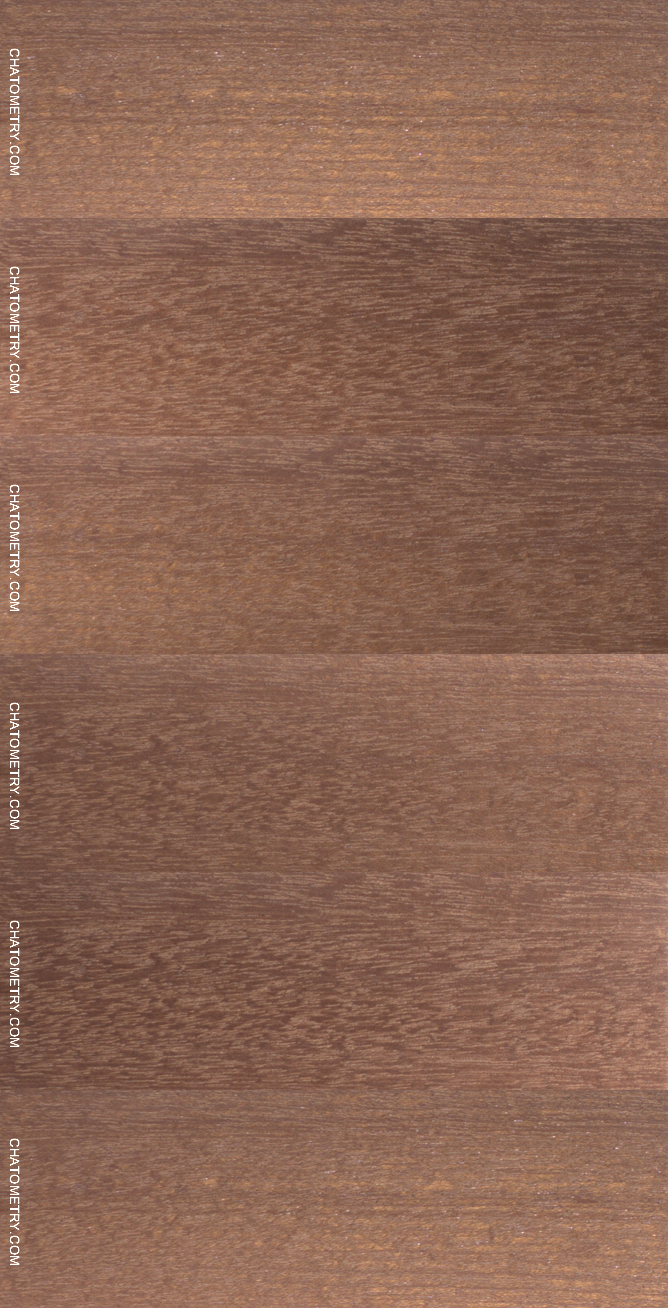
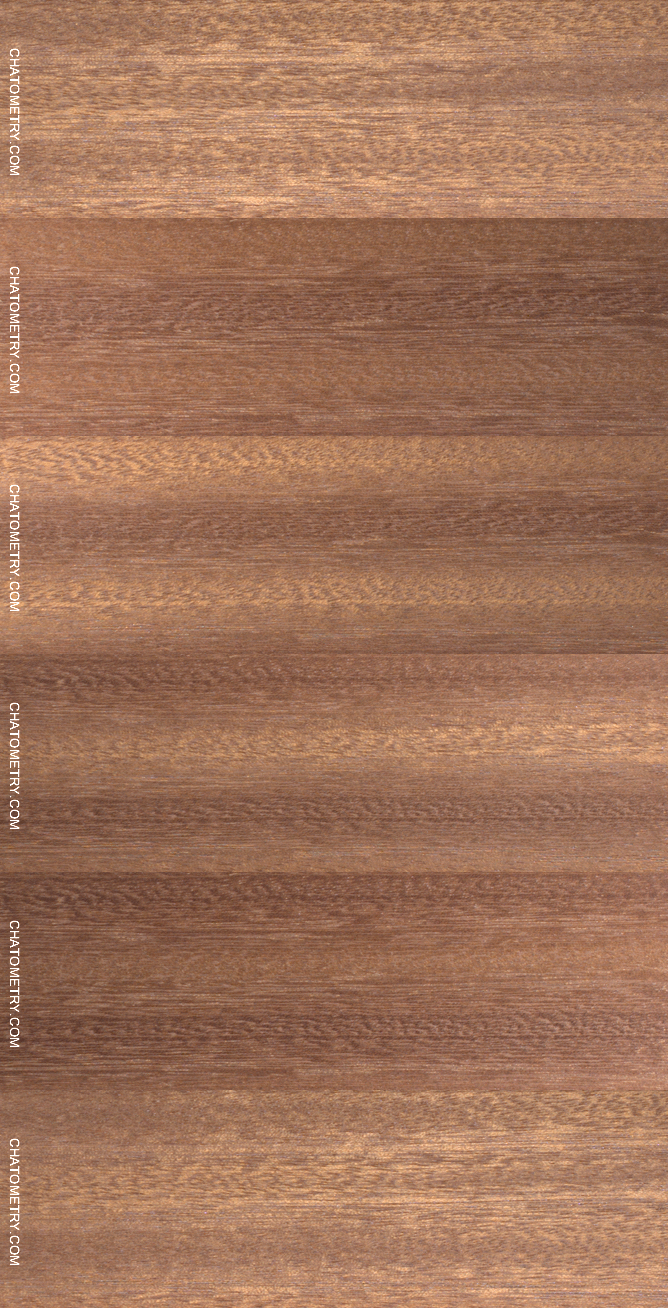
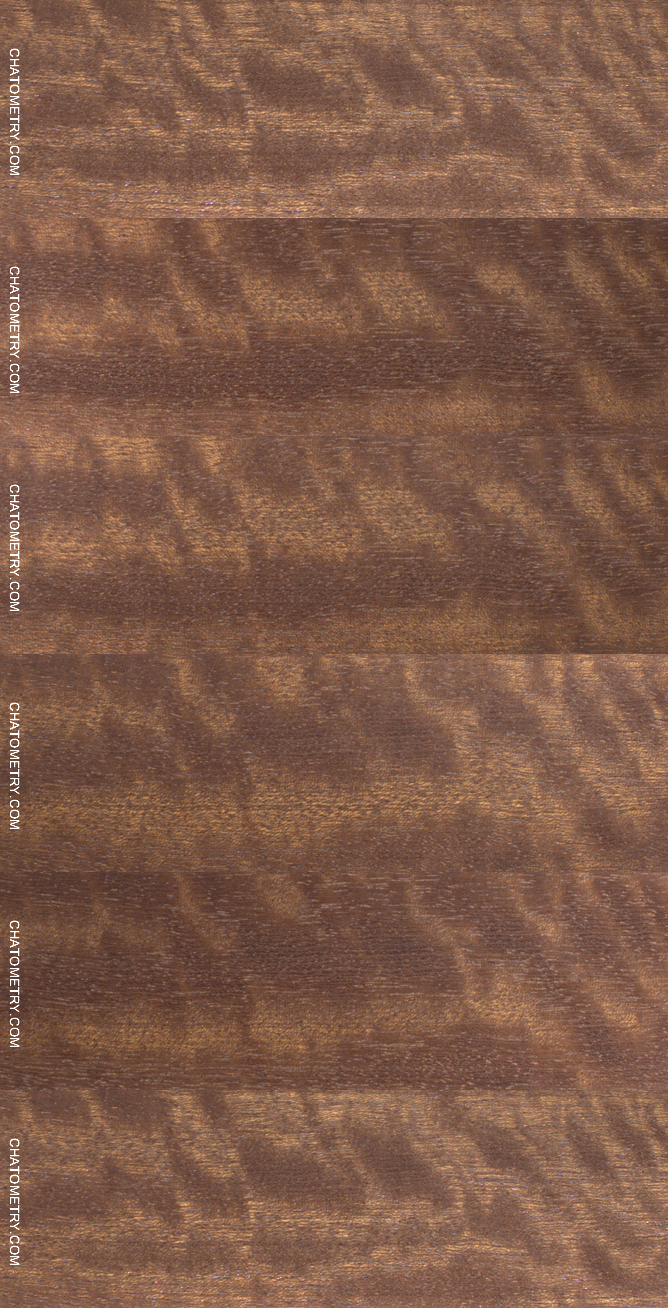
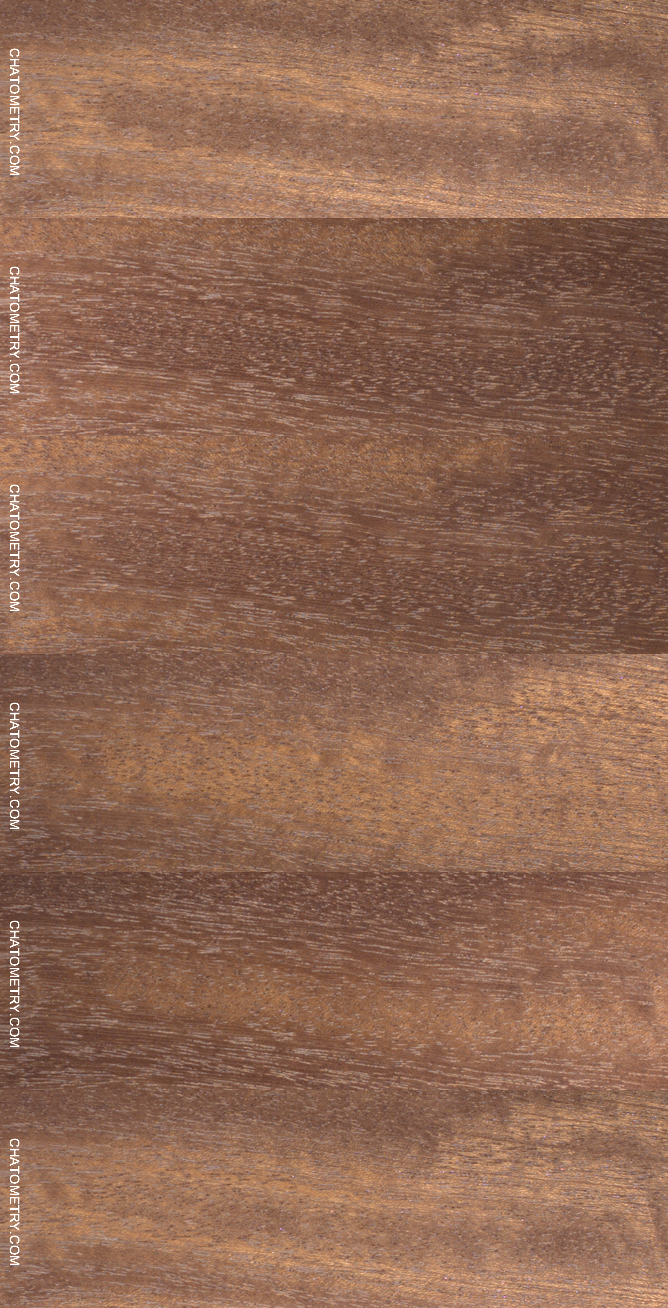
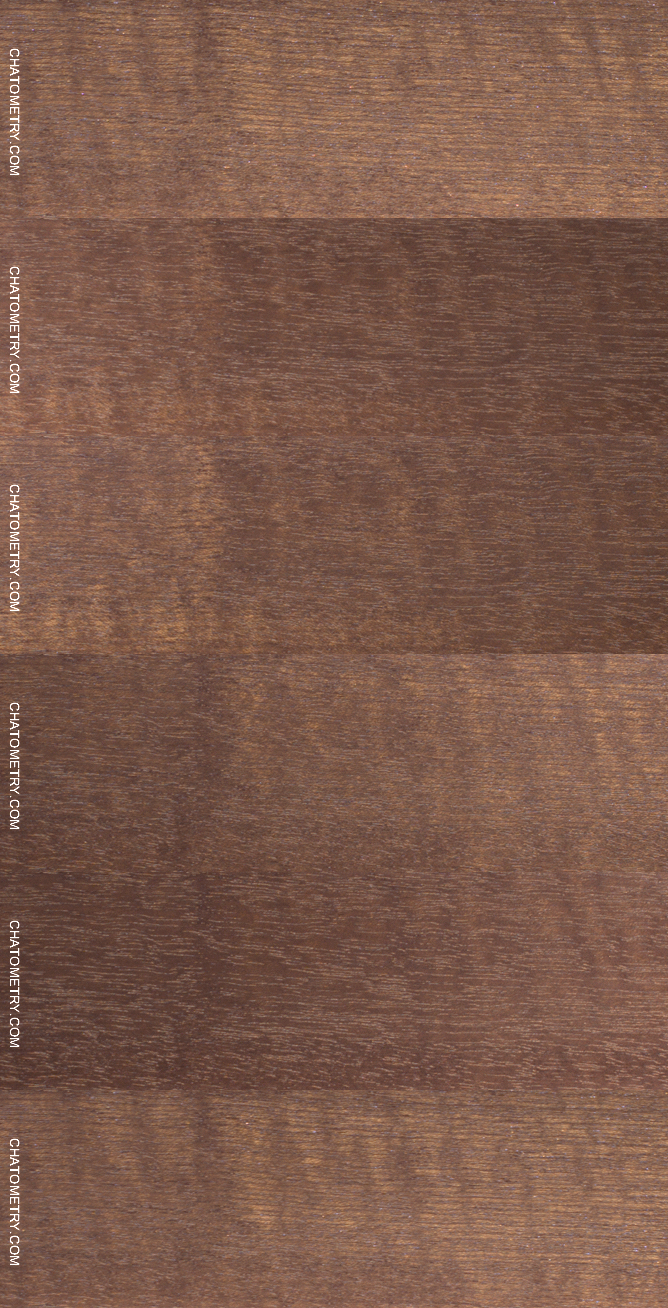
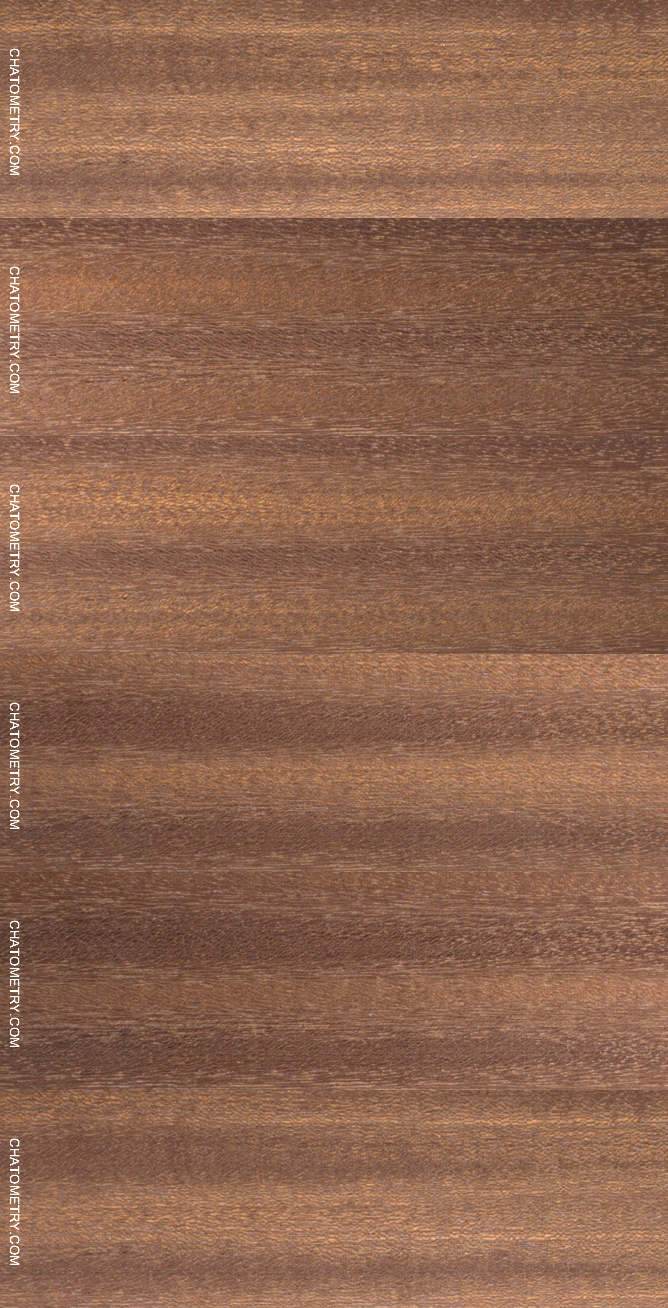
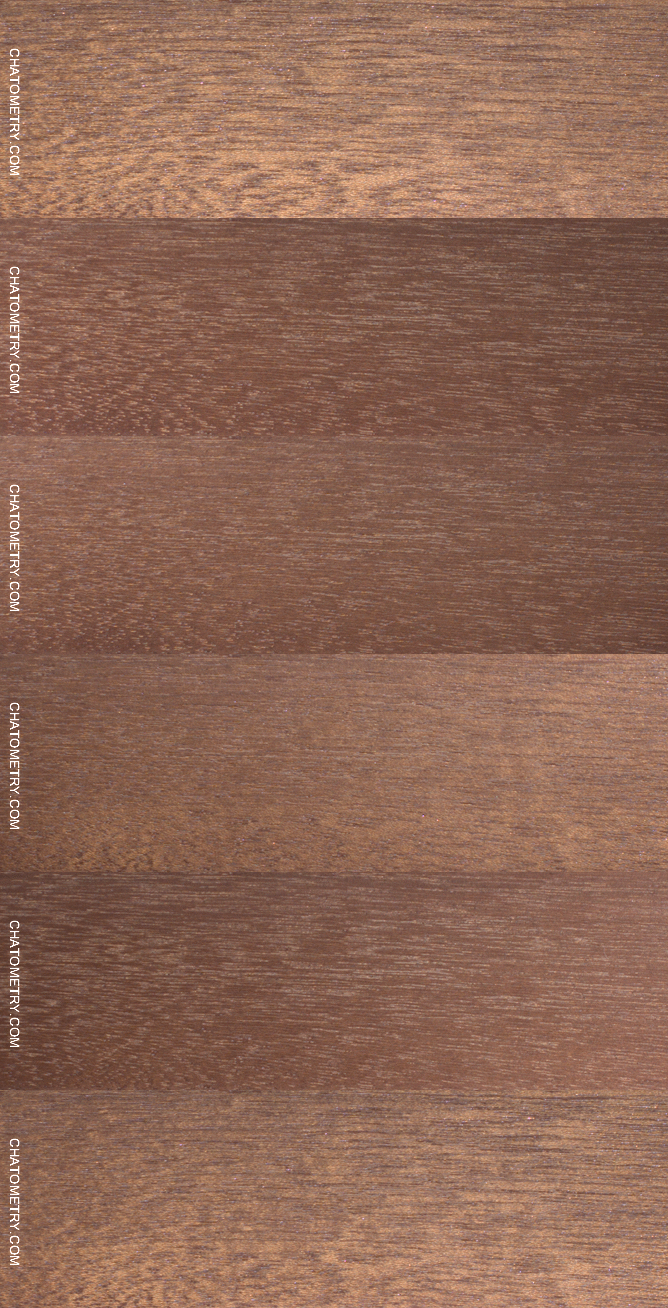
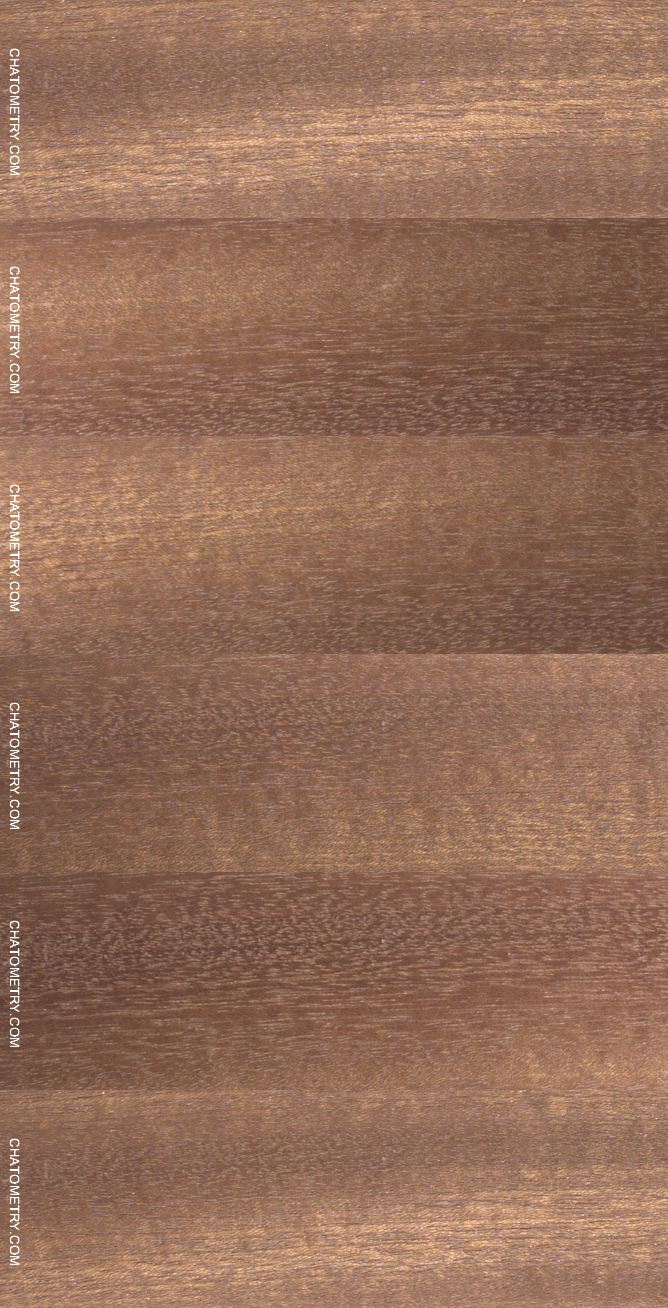
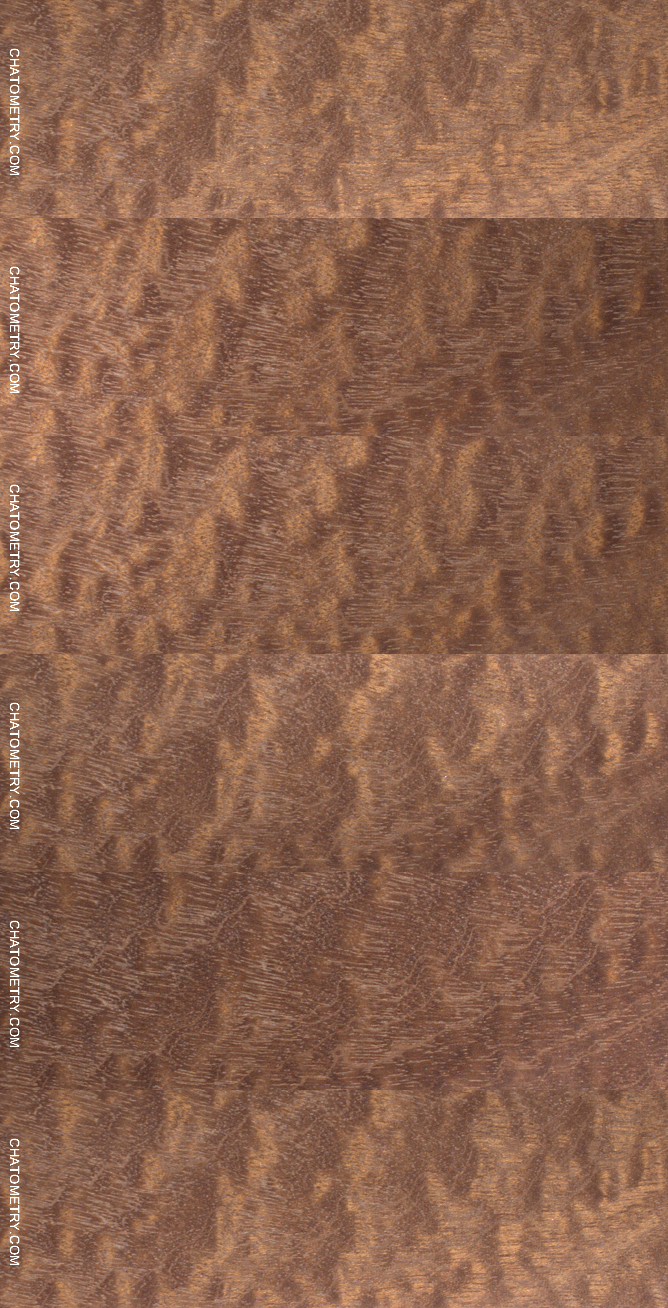
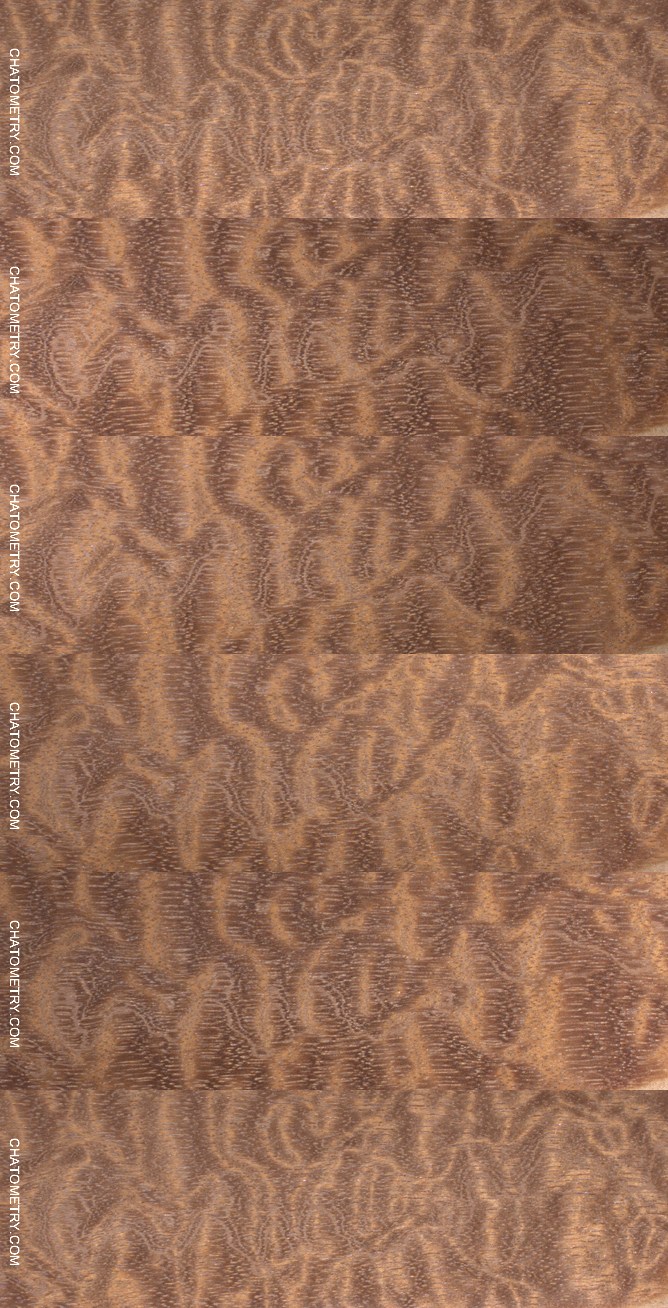
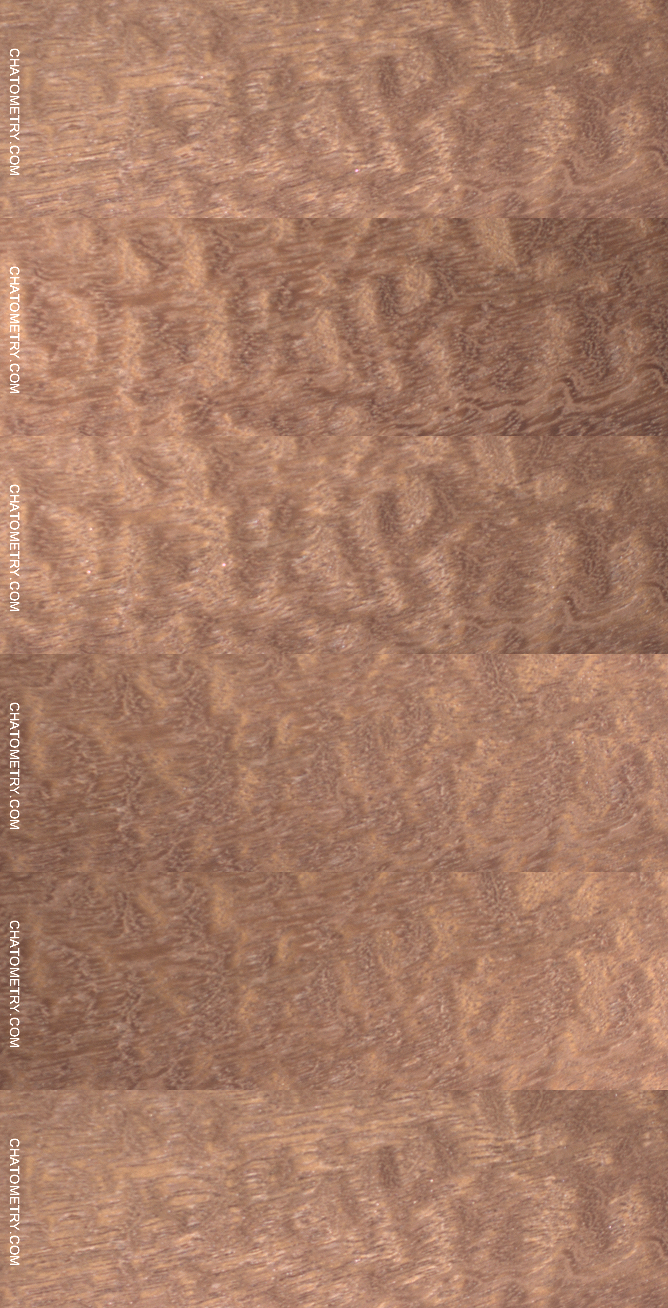
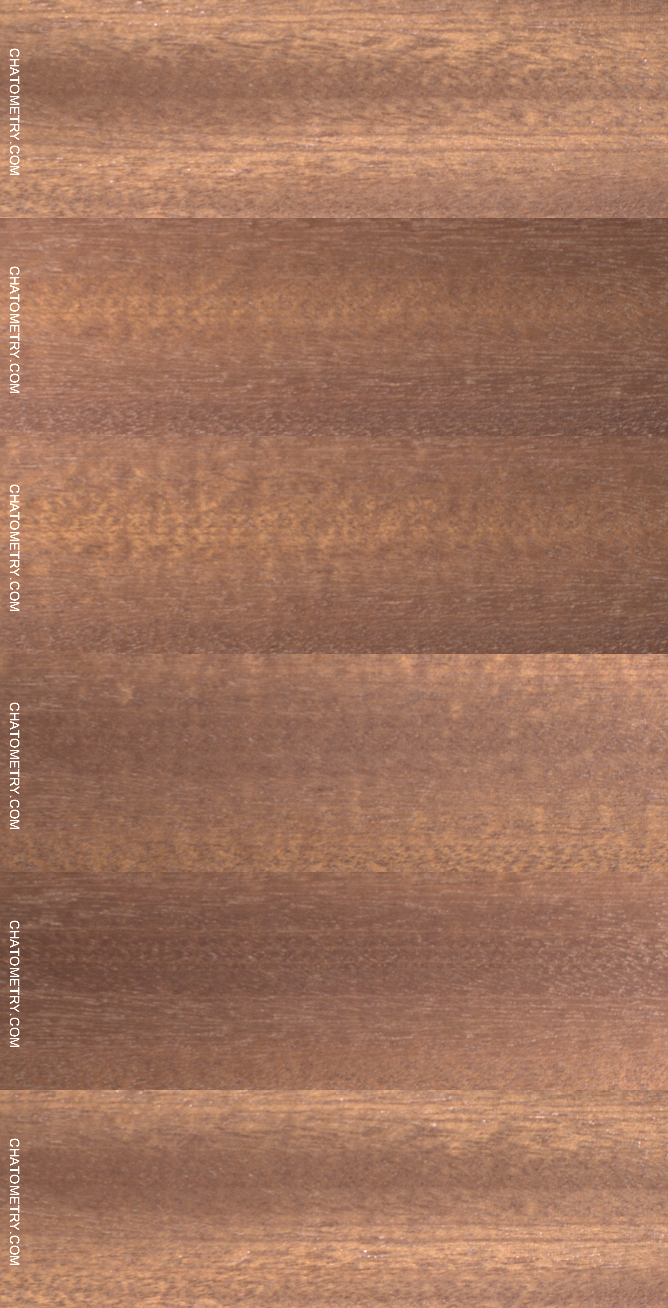
See also
FINISHING SAPELE
PROGRESSIVE GRIT SANDING
ULTRA FINE SANDING
SUPERSURFACING
EPOXY RESIN
BLEACHING SAPELE
UV LIGHT EXPOSURE
MICROSCOPE PICTURES
LARGE GIFS 5
LARGE GIFS 6
SCRAPING
PROGRESSIVE GRIT SANDING PART 2
Want to know more? Get Woodworker’s Guide to Chatoyance!


… and enjoy the read!
That’s a really fascinating look at the different variations of Sapele wood. I hadn’t realized there were so many regional names for it!
Thank you!